Nineawn grass
Enneapogon desvauxii
Description
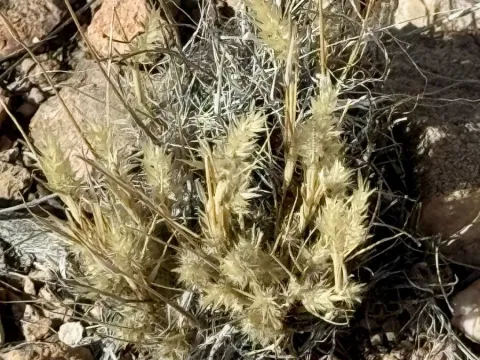
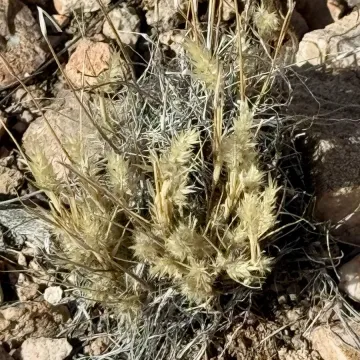
Nineawn grass (lat. Enneapogon desvauxii) is a distinctive perennial or annual grass belonging to the Poaceae family. It is recognized in agronomy as a highly specialized plant capable of thriving in harsh, moisture-deficient environments where most conventional forage crops fail to survive.
The origin of this species is traced to the arid and semi-arid regions of the Americas, particularly across Mexico and the southwestern United States. The plant has evolved to dominate stony, sandy, and calcareous soils, effectively utilizing marginal land areas that are otherwise unsuitable for intensive agricultural development.
The botanical structure of Enneapogon desvauxii is adapted for extreme water conservation. It forms compact tussocks, and its leaves are typically thin and rigid. The plant is named for the nine distinct awns on its flowering scales, which protect the seeds and assist in their dispersal during windy conditions common in its native habitat.
Regarding climate and soil requirements, the species is remarkably undemanding. It requires full sun exposure and well-drained, alkaline or rocky soils. Agricultural practices focus on preventing overgrazing to ensure the plant can complete its life cycle and set seeds, as its survival strategy is highly dependent on quick growth spurts following erratic rainfall events.
The primary agricultural and environmental applications for Nineawn grass include:
- Providing grazing forage for livestock in arid range lands.
- Stabilizing loose soil and preventing wind erosion.
- Restoring vegetation cover on degraded semi-desert tracts.
- Supporting ecosystem services by maintaining cover in water-limited areas.
Photo gallery