
Enydra anagallis
Enydra anagallis
Description
Enydra anagallis is a semi-aquatic herbaceous plant belonging to the Asteraceae family. This species is well-known for its affinity to wetland environments, often thriving in marshes, shallow water bodies, and saturated soils in tropical regions around the world.
The plant originates from the tropical zones of Asia and Africa. Its natural range is restricted to areas where year-round humidity is high and temperature fluctuations are minimal. Due to these specific requirements, it is widely cultivated in regions that can mimic its native marshy habitats.
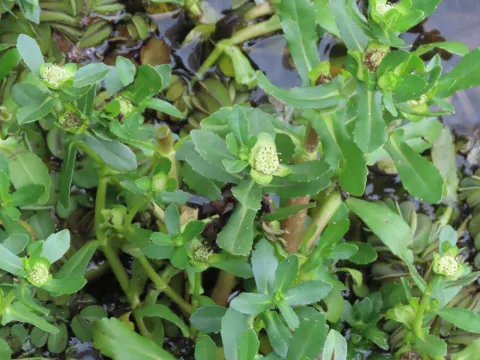
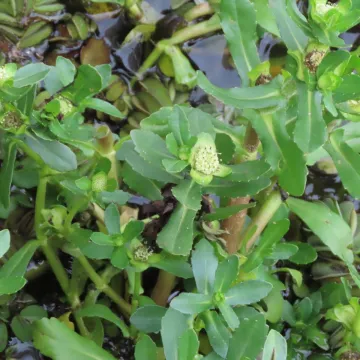
Botanically, Enydra anagallis features prostrate or ascending stems that easily root at the nodes. The leaves are typically oblong and arranged in an opposite fashion. Its flowers are produced in small, inconspicuous heads, which are characteristic of this genus, reflecting its evolutionary adaptation to nutrient-rich aquatic ecosystems.
Regarding agrotechnical requirements, the plant demands consistently saturated soil or standing water. It thrives best in muddy substrates rich in organic matter. Proper management involves maintaining water levels, as drought stress is fatal to the crop. Periodic fertilization is necessary to ensure vigorous vegetative growth.
Economically, the plant is valued as a leafy vegetable and a component in traditional herbal medicine. Its culinary use is widespread in some Asian cuisines. Common problems include fungal infections caused by stagnant water conditions and various insect pests that target the succulent stems, requiring careful integrated pest management.
Photo gallery