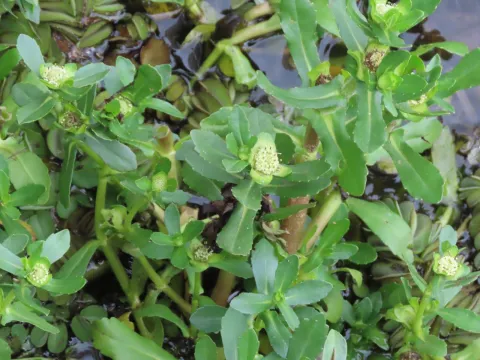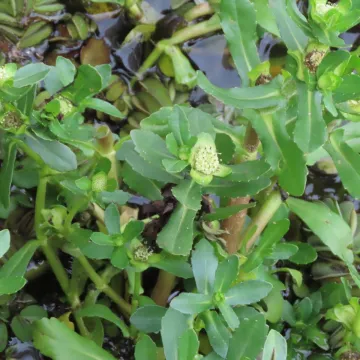
Enydra fluctuans
Enydra fluctuans
Description
Enydra fluctuans, commonly known as helencha or water cress (though distinct from the western watercress), is a trailing aquatic herb belonging to the Asteraceae family. It is characterized by its succulent, prostrate stems that float on the water surface and lanceolate, serrated leaves that provide a distinct crisp texture when harvested fresh.
The plant is native to the tropical and subtropical regions of Southeast Asia and India. It naturally thrives in wetland habitats, including marshes, ponds, and shallow irrigation canals, particularly within paddy fields. Its widespread distribution across Asia highlights its importance as a resilient and easy-to-harvest wild vegetable that has successfully transitioned into cultivated settings.
From an agronomical perspective, Enydra fluctuans requires specific environmental conditions for optimal yield. It prefers a warm climate with high humidity and significant sunlight exposure. The soil requirements are minimal, as it primarily draws nutrients directly from the water or the nutrient-rich silt of riverbeds, making it an excellent candidate for aquatic agricultural systems.
Cultivation practices primarily involve vegetative propagation using stem cuttings, which possess the ability to root quickly in water. Farmers typically plant these cuttings in shallow water beds, ensuring the water level remains stable. The crop requires minimal fertilizer if grown in fertile aquatic zones, though monitoring for invasive aquatic weeds is essential to prevent overcrowding and nutrient competition.
In culinary terms, the tender shoots and leaves of Enydra fluctuans are highly regarded. They are used in various traditional dishes, often sautéed or cooked with lentils. Beyond food, the plant is valued for its potential medicinal properties and nutrient density. While robust, the plant can occasionally be affected by leaf-eating beetles or fungal pathogens in stagnant, overcrowded conditions, which can be mitigated by ensuring proper water circulation in the growing area.
Photo gallery