Description
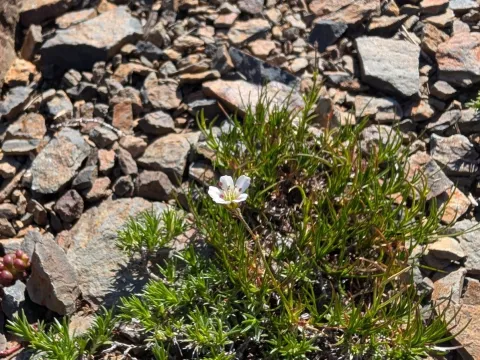
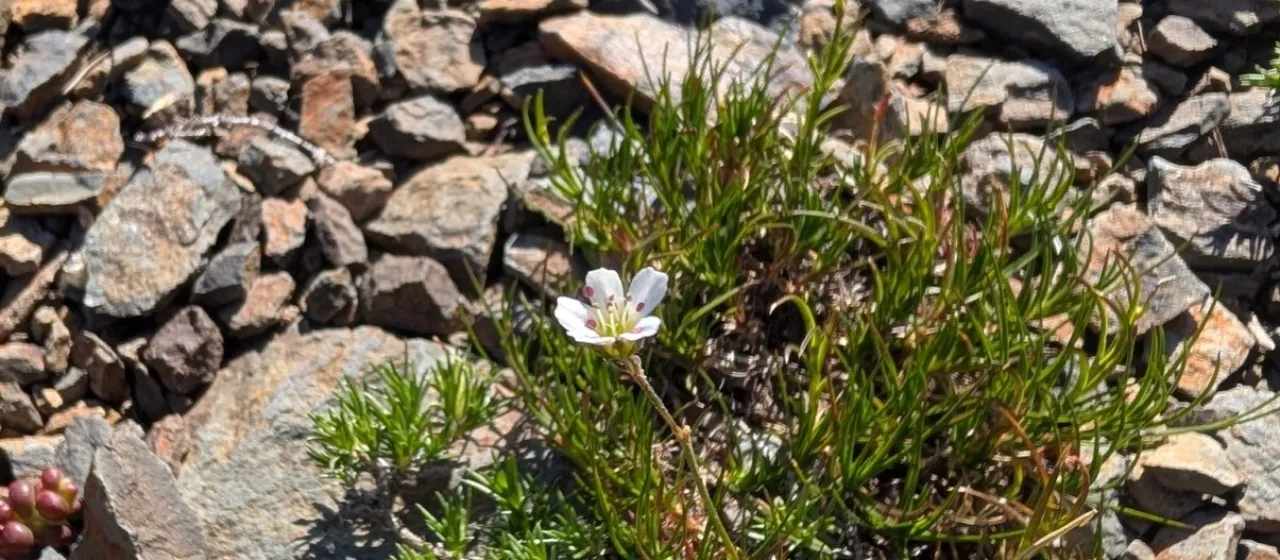
Eremogone capillaris, commonly known as thread-leaved sandwort, is a herbaceous perennial belonging to the Caryophyllaceae family. This resilient plant is highly valued for its compact, cushion-forming growth habit, making it a classic choice for enthusiasts of alpine flora and rock garden cultivation.
The native range of this species extends across the mountainous regions of Asia and North America. It thrives in high-altitude environments, often found in rocky slopes, gravelly barrens, and dry, open habitats. Its evolutionary adaptation to these harsh conditions allows it to remain hardy and vigorous in climates where other vegetation may struggle.
Botanically, the species is characterized by its hair-like, narrow foliage that forms dense, mat-forming rosettes. During the flowering period, it produces delicate, star-shaped white or pale-pink flowers held on slender, erect stems. This structural elegance makes it a highly desirable candidate for low-maintenance landscaping.
Agricultural and gardening requirements focus on mimicking its natural habitat. The plant demands excellent drainage and prefers infertile, rocky, or sandy soil conditions. It is remarkably drought-tolerant once established and requires minimal fertilization. Overwatering, particularly in heavy or damp soils, is the primary risk factor for its health.
In terms of agricultural and horticultural use, Eremogone capillaris is primarily utilized as an ornamental plant for rock gardens, trough gardens, and alpine xeriscaping. It has few natural pests, though gardeners should watch for root rot in poorly drained areas. It is generally resistant to most common garden diseases provided that the soil conditions remain lean and aerated.
Photo gallery