

Description
Sainfoin (Onobrychis viciifolia Scop.) is a perennial forage legume widely recognized for its high nutritional value and adaptation to various environmental conditions. Belonging to the Fabaceae family, this plant is characterized by a deep taproot system, which allows it to thrive in dry conditions and extract minerals from lower soil profiles, contributing significantly to soil structure improvement.
Originally native to parts of Europe and the Middle East, sainfoin has been cultivated for centuries in temperate regions. It is particularly valued in areas with calcareous or alkaline soils where other forage legumes, such as alfalfa, might struggle due to soil acidity or specific moisture requirements. Its ability to fix atmospheric nitrogen makes it a sustainable choice for crop rotation.
Botanically, the plant features erect, hollow stems and pinnate leaves. The flowers are arranged in showy, rose-colored spikes, serving as a magnet for honeybees and other pollinators. The fruit is a single-seeded pod. Sainfoin is known for its cold tolerance and its ability to regrow rapidly after cutting or grazing, making it highly productive over several years.
Successful cultivation requires well-drained soils, preferably those rich in calcium. It does not tolerate waterlogging or highly acidic soil conditions. Proper seedbed preparation is crucial, as the seeds need good soil contact for germination. Since the seedling stage is relatively slow, weed management during the first year is vital to prevent competition from more aggressive weeds.
Sainfoin is highly prized as a livestock feed because it contains condensed tannins, which prevent bloating (bloat-safe forage) in cattle and sheep, a common issue with other legumes. It can be harvested as hay, silage, or grazed directly. Additionally, it is an excellent honey plant, producing high-quality honey, and is frequently used in erosion control and soil restoration projects.
- Excellent nutritional quality for livestock.
- Bloat-free forage due to condensed tannins.
- High productivity as a honey-producing crop.
- Superior drought resistance and winter hardiness.
- Effective nitrogen-fixing capabilities for soil health.
While relatively resistant to many pests, the crop can be affected by fungal diseases like powdery mildew during wet and humid periods. Insect pests such as weevils may target the foliage and developing seeds. Integrated pest management, including choosing resistant varieties and timely harvesting, remains the best approach to maintain high forage yields and seed quality.
Контент-граф
Connections · Sainfoin
Most often together:
Marketplace
Products · 11

Treflan 480
Доу АгроСайенсіс С.А.С., Друзенхайм, Франція
Herbicides, Desiccants
3
2
·
4.1K
6 offers
0.6 €за 1 л
Купить


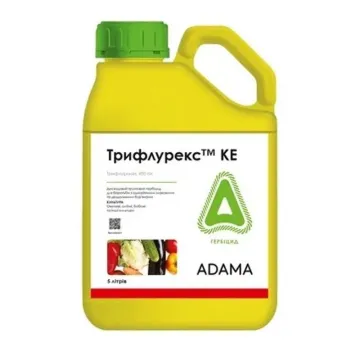
Triflurex 240 g.e., (Trifluralin, 240 g/l)
F.A.GAN Chemical Manufacturers Ltd. Israel, member
Herbicides, Desiccants
0
0
·
53
1 offer
12.89 €
Купить


Patrick C.E.
F.A.GAN Chemical Manufacturers Ltd. Israel, member
Herbicides, Desiccants
0
0
·
30
1 offer
0.83 €
Купить

Trifluralin 480 g/L, herbicide
F.A.GAN Chemical Manufacturers Ltd. Israel, member
Herbicides, Desiccants
0
0
·
20
7 offers
6.1 €за 1 л
Купить
