
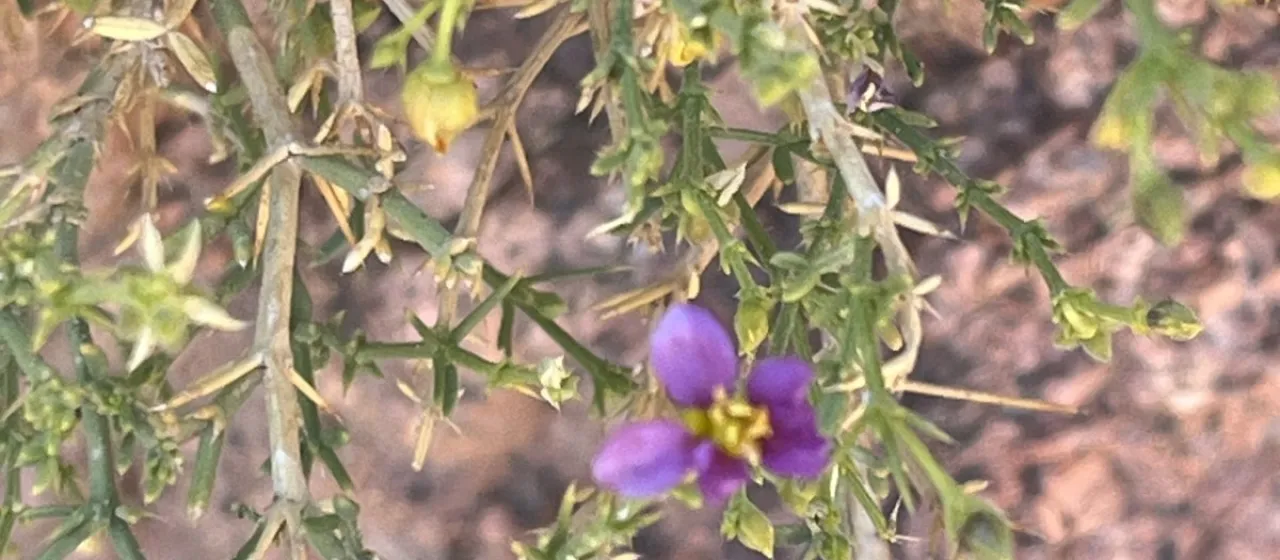
Description
Fagonia arabica is a perennial herb or small shrub belonging to the Zygophyllaceae family. It is a quintessential desert plant, highly adapted to extreme arid environments where water scarcity and high soil salinity are the norm. Its ability to thrive in harsh conditions makes it a significant species for studying plant stress physiology.
The plant is native to the desert regions of North Africa, the Middle East, and parts of South Asia. It primarily inhabits stony, sandy, and alkaline soils. In the context of arid land management, Fagonia arabica acts as a pioneer species, helping to stabilize soil surfaces and providing a habitat for micro-fauna in otherwise desolate landscapes.
Botanically, Fagonia arabica is distinguished by its rigid, thorny branches which are modified stipules. These thorns serve a protective function against herbivores and help reduce transpiration. The root system is notably deep and expansive, reaching subterranean water reserves. The plant produces small, delicate pink or purple flowers that bloom periodically throughout the year depending on moisture availability.
Cultivation requirements for this species are minimal, as it is a natural xerophyte. It demands full solar exposure and highly permeable, well-drained soil. It does not tolerate waterlogging, which can lead to root rot. While agricultural techniques for commercial production are still in experimental stages, it is highly valued for its natural resilience and low input requirements in arid-land restoration projects.
In terms of economic and medicinal usage, Fagonia arabica is highly esteemed in traditional herbal medicine. Various parts of the plant are utilized for their therapeutic potential, including:
- Anti-inflammatory and analgesic applications.
- Use in remedies for skin conditions and fever.
- Potential for pharmaceutical compounds derived from its secondary metabolites.