
Description
Fagonia californica, commonly known as California fagonia, is a perennial desert shrub belonging to the Zygophyllaceae family. It is a highly specialized plant species, evolutionarily adapted to survive in harsh, arid, and semi-arid environments where water availability is extremely limited.
The plant is native to the desert regions of North America, particularly the Sonoran and Mojave deserts. Its natural range encompasses the southwestern United States and northwestern Mexico. It thrives in environments characterized by high temperatures and intense solar radiation, often acting as a pioneer species in sandy or rocky soils.
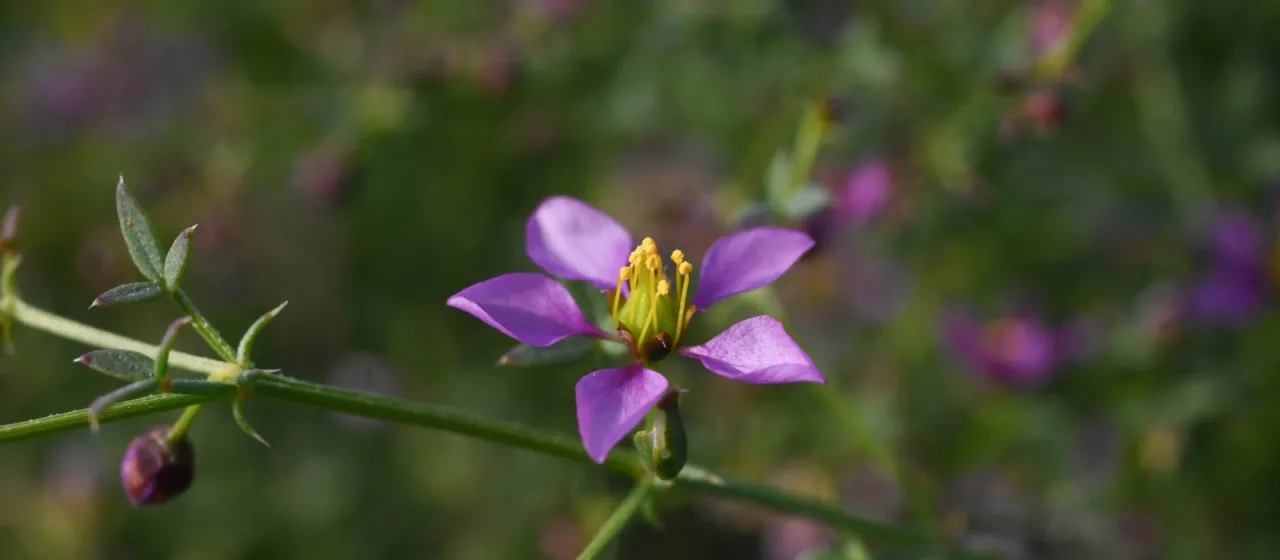
Botanically, Fagonia californica is recognized by its stiff, spiny stems and small, simple leaves that help reduce transpiration. The plant produces delicate five-petaled flowers, typically ranging from pink to purple, which provide a stark contrast to the barren desert landscapes where it naturally occurs.
Cultivation requirements for this species are minimal but strict regarding drainage. It requires well-draining, gritty, or sandy soil to prevent root rot. Once established, the plant is remarkably drought-resistant and requires no supplemental irrigation, as its deep taproot is designed to access residual moisture deep within the substrate.
In terms of agricultural and scientific utility, Fagonia californica is of interest for its secondary metabolites, which possess potential medicinal properties. Due to its adaptation to harsh conditions, it is largely resistant to common agricultural pests and diseases, making it a robust subject for studies on plant resilience and desert ecosystem management.