
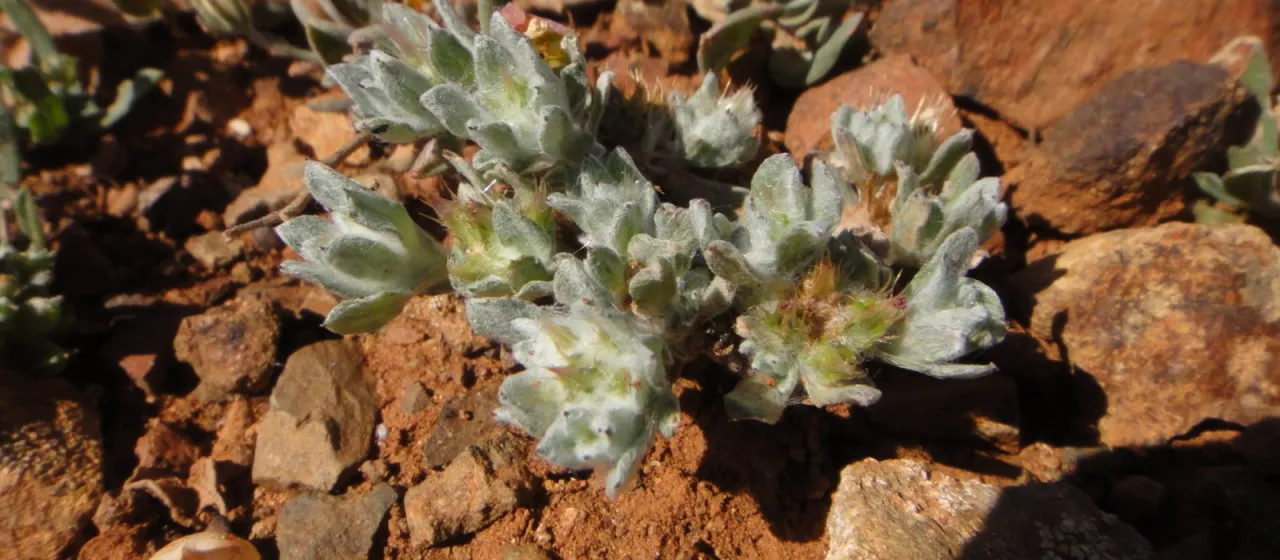
Description
Desert cudweed (Filago desertorum) is an annual herbaceous plant belonging to the Asteraceae family. In agricultural and botanical practice, this species is recognized as a specialized crop for arid regions, possessing significant ecological adaptability to harsh, dry climate conditions.
The species has a natural origin, historically linked to the semi-desert and steppe zones of Central Asia. Its cultivation range spans areas characterized by a sharply continental climate, where the plant has evolved to withstand extreme temperature fluctuations and water scarcity, serving as a key component of local phytocenoses.
Botanically, the plant is a low-growing annual with pubescent stems and leaves, which serves as a protective mechanism against intense solar radiation. The flowers are gathered into small heads, often surrounded by bracts, creating the plant's distinct appearance. It features a taproot system capable of reaching deep soil layers to source moisture.
Desert cudweed is highly undemanding regarding climate, preferring well-lit sites with sandy or sandy-loam soils. Agronomic management involves minimal intervention; the crop does not require intensive irrigation or heavy synthetic fertilizers, but it is sensitive to waterlogging, which can lead to root rot and other fungal diseases.
Commercial utilization of the species focuses on phytopharmacology and strengthening forage stocks in arid environments. Key areas of application include:
- harvesting raw materials for the pharmaceutical industry;
- use as a phytomeliorant for degraded soils;
- attracting beneficial entomophages to agroecosystems.
Common diseases of the crop include fungal infections such as powdery mildew during prolonged periods of high humidity. Regarding pests, various species of aphids and weevils pose the greatest threat, as they can damage the generative organs of the plant, thereby reducing seed yield and overall crop vigor.