
Description
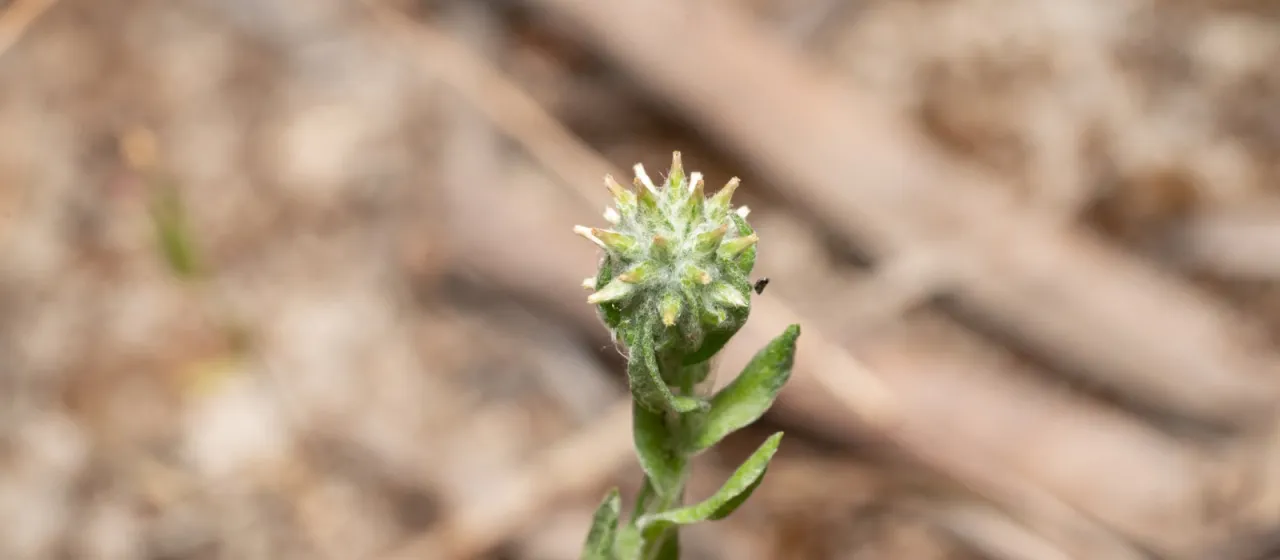
Woolly-headed filago (Filago eriocephala) is an annual herbaceous plant belonging to the Asteraceae family. Known in botany for its distinct woolly appearance, it is categorized as a crop suitable for marginal lands where moisture and soil fertility are limited. Its structural resilience makes it an object of interest for dryland cultivation strategies.
The plant originates from the Mediterranean basin and the Middle East, where it thrives in arid to semi-arid environments. It is naturally adapted to gravelly, rocky, and sandy soil substrates. Its historical distribution confirms its ability to colonize areas with high exposure to sun and minimal rainfall, making it a sustainable choice for restoring degraded terrains.
Morphologically, Filago eriocephala is characterized by a height of 10 to 25 cm and a dense covering of white hairs that protect the plant from transpiration. The leaves are typically narrow, and the flowers are gathered in tight, woolly heads. The root system is primary and taproot-like, capable of reaching moisture trapped deep within rocky crevices.
The agrotechnical requirements for this crop are relatively low. Sowing should occur in early spring in well-drained, porous soils. The species requires minimal irrigation once established and is highly sensitive to waterlogged conditions, which promote fungal infections like grey mold. No specialized chemical pest control is typically required, as the plant possesses natural defense mechanisms.
Economically, this species is utilized in the pharmaceutical industry due to its astringent and antiseptic properties. Beyond medicine, it is increasingly used in xeriscaping—a landscaping method designed to reduce the need for supplemental watering. Its role in sustainable agriculture as a soil-stabilizing agent continues to be explored by environmentalists and agricultural scientists alike.
- Excellent adaptation to arid environmental conditions.
- Requires minimal maintenance and zero heavy fertilization.
- High vulnerability to soil moisture stagnation.
- Potential uses in herbal medicine and landscape design.