
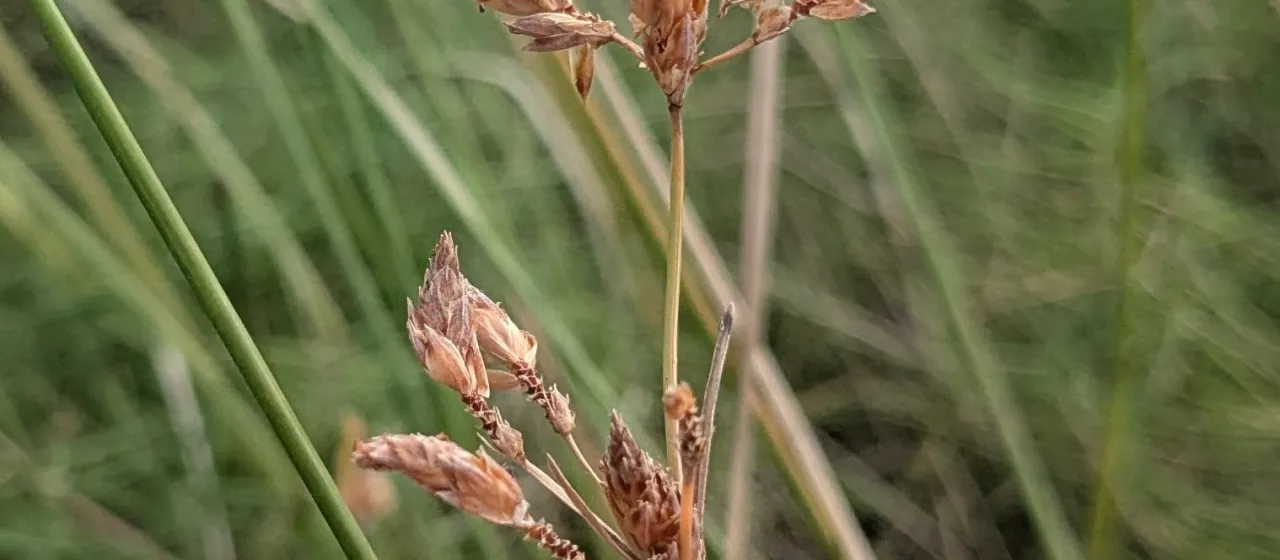
Description
West Indian marshgrass (lat. Fimbristylis ferruginea) is a perennial herbaceous plant belonging to the Cyperaceae family. It typically grows in dense tussocks with erect stems reaching heights between 60 and 90 centimeters. This species is recognized for its significant resilience to environmental stressors, particularly in waterlogged and saline soil conditions where standard crops fail.
The plant originates from tropical and subtropical regions across Africa, Asia, and the Americas. Its natural habitat includes marshes, riverbanks, and saline coastal plains. Because of its wide geographical distribution and high tolerance to extreme moisture, it has become a staple of wetland ecosystems and an interesting candidate for unconventional agricultural use in problematic soil areas.
Botanically, the plant is identified by its narrow, linear leaves and distinctive rusty-brown, head-like spikelets. Its root system is fibrous and robust, allowing it to anchor securely in muddy or sandy substrates. This complex root structure is highly efficient at nutrient absorption, even in soils with high concentrations of mineral salts that would be toxic to many other plant species.
The agronomic requirements for Fimbristylis ferruginea focus on maintaining consistent moisture levels and adequate sunlight. It exhibits excellent tolerance to saline soils, making it a valuable asset for the restoration of degraded agricultural land. Propagation is usually achieved through seed dispersal or vegetative division of the clumps, allowing for efficient establishment of crop stands in challenging environments.
- Utilization as a natural stabilizer for coastal and riverbank erosion control.
- Harvesting of biomass for rough forage or mulch material in specialized farming.
- Use of fiber for weaving and artisanal products in rural industries.
- Application in phytoremediation projects to extract excessive salts from soil.
In terms of plant health, West Indian marshgrass is relatively resistant to major pests and diseases that affect typical cereal crops. The primary threats involve potential fungal growth if water drainage is severely obstructed or if the stands become stagnant. Overall, the plant is a low-maintenance, high-utility species suitable for sustainable land management in tropical climates.