
Description
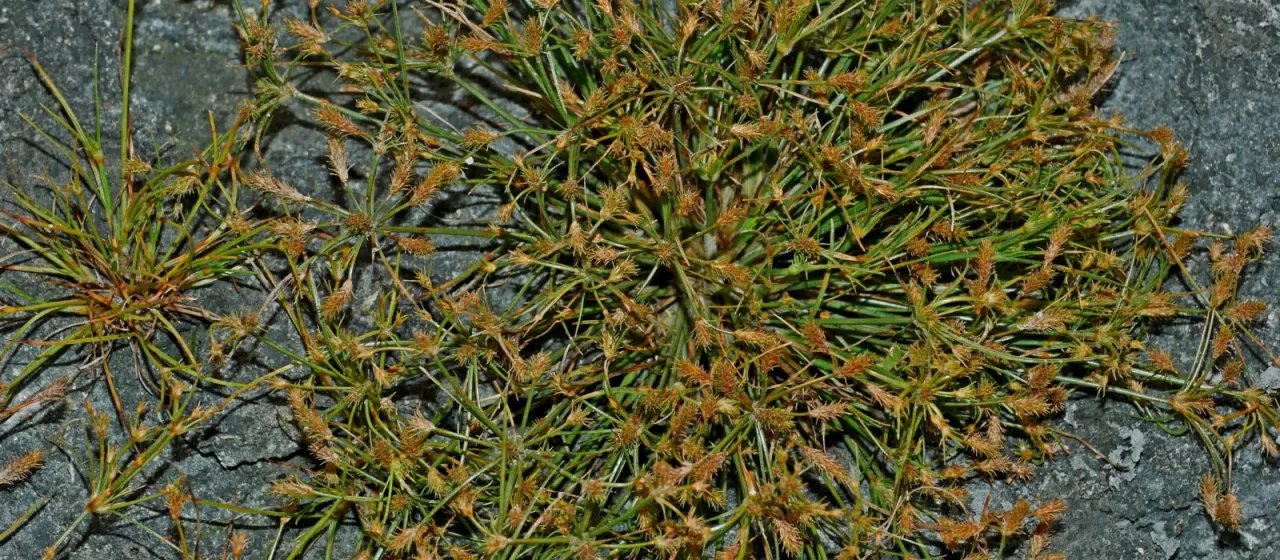
Fimbristylis squarrosa is a distinct annual herb belonging to the Cyperaceae family, commonly known as the sedge family. Within agricultural settings, this plant is frequently identified as a wetland-associated species, often found in rice paddies, irrigation ditches, and areas with poorly drained, moist soils.
The origin of this species is widespread throughout tropical and subtropical regions globally, spanning across Eurasia and North America. It is highly adapted to environments where water levels fluctuate, making it a prevalent plant in riparian zones, silty banks, and periodically flooded agricultural terrains.
Botanically, the plant presents as small, tufted stems reaching heights between 5 and 30 centimeters. Its leaves are narrow, typically shorter than the stems, and may be sparsely hairy. The defining feature is its inflorescence, consisting of small spikelets with squarrose (outward-spreading or recurved) scales, from which the species name is derived.
The plant requires high soil moisture levels and consistent light to thrive. It performs best in sandy or silty soils that maintain high saturation. In agronomic practices, it is typically viewed as a component of the local weed flora that requires management in water-intensive crops, as it can compete for space and nutrients during the early establishment phase of the main crop.
While Fimbristylis squarrosa has limited direct agricultural use, it is an important subject of study for its ecological role in soil stabilization near water management infrastructure. Control measures against its proliferation include traditional tillage, the use of rotation schedules that allow for soil drying, and proper water level regulation in irrigation systems.
Key factors affecting the plant:
- Soil moisture saturation levels
- Nutrient competition in paddy systems
- Exposure to specific aphid populations
- Susceptibility to fungal pathogens during high humidity