
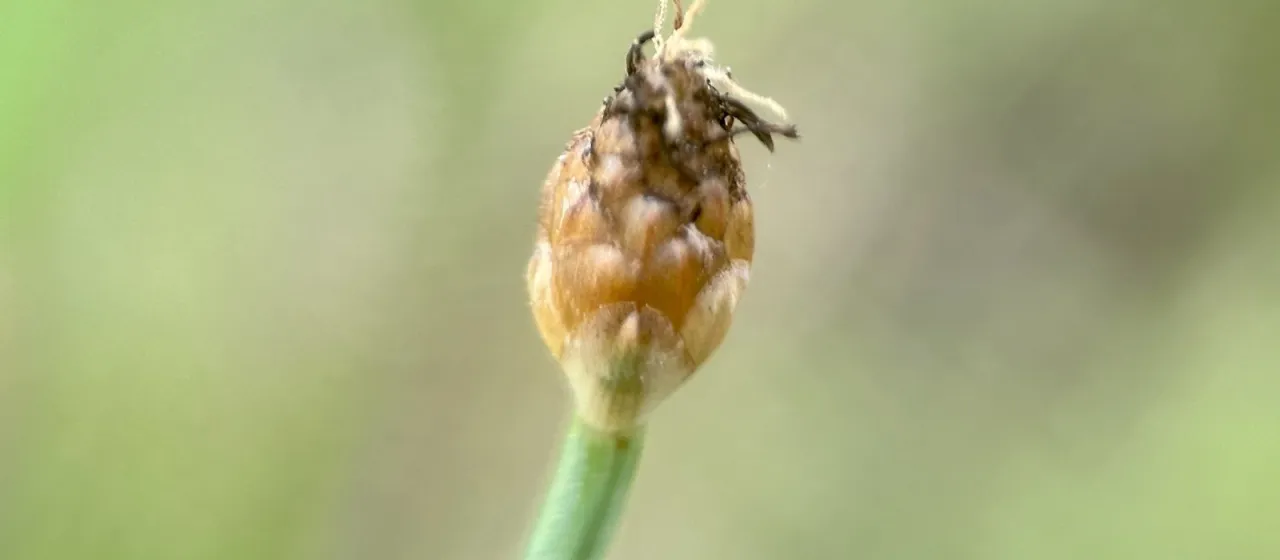
Description
Fimbristylis tetragona is a notable perennial herb belonging to the Cyperaceae family. It is distinctively characterized by its four-angled stems, which provide its scientific name and distinguish it from many other members of the genus. As a wetland-adapted species, it thrives in environments that are typically challenging for conventional terrestrial crops.
The native distribution of this plant spans across tropical and subtropical regions, particularly in South and Southeast Asia, as well as parts of Northern Australia. It is frequently observed growing in rice paddies, marshes, and along the banks of stagnant water bodies. In an agricultural context, it is often managed as a wetland plant or recognized as an important component of the local ecological landscape.
Botanically, the plant forms dense tufts with linear leaves originating from the base. The inflorescence is a solitary, egg-shaped, or conical spikelet located at the apex of a smooth, leafless stalk. The root system is fibrous and robust, allowing the plant to anchor effectively in soft, water-saturated soils typical of its habitat.
Regarding cultivation requirements, Fimbristylis tetragona demands consistently high moisture levels and full to partial sunlight. It prefers muddy, nutrient-rich substrates and can tolerate a variety of soil pH levels. Agronomically, it requires minimal intervention provided that the hydro-regime is maintained, making it a low-maintenance species for aquatic gardening and wetland restoration projects.
In terms of agricultural and commercial use, the species is valued for its role in erosion control and sediment stabilization. While not a primary staple crop, its resilience makes it an interesting subject for ecological research. Common pests include aphids or larvae when grown in non-aquatic conditions, while water-borne fungal pathogens may affect the roots if the water quality deteriorates significantly.
- Requires constant hydration for optimal growth
- Efficient nutrient uptake from aquatic environments
- Valuable for soil stabilization in wetlands
- Excellent candidate for ornamental aquatic landscaping