
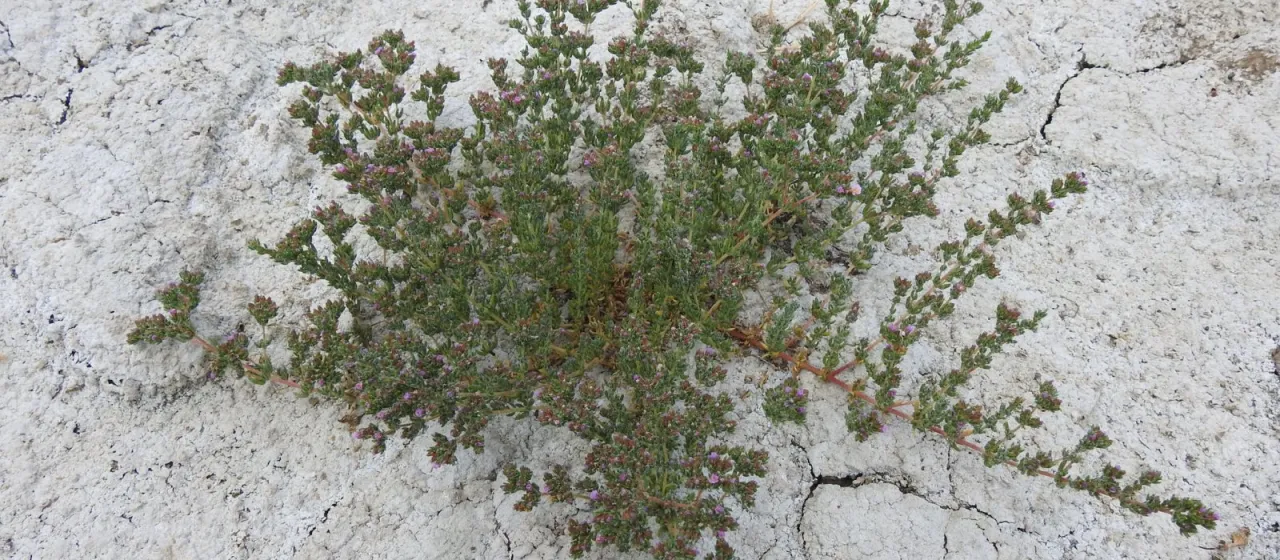
Description
Frankenia boissieri is a hardy, semi-shrubby species belonging to the Frankeniaceae family. In the field of agronomy, this plant is recognized as a highly specialized halophyte, capable of thriving in saline environments where standard agricultural crops would experience osmotic stress and mortality.
The plant originates from the arid regions surrounding the Mediterranean, extending into parts of North Africa. Its natural habitat is defined by extreme heat, high evaporation rates, and soil profiles saturated with salts. These environmental pressures have shaped the plant into a resilient biological tool for sustainable land management.
Botanically, Frankenia boissieri is characterized by its woody base and dense, succulent-like foliage. The leaves are equipped with specialized salt-secreting glands, a physiological mechanism that allows the plant to manage internal mineral homeostasis while absorbing nutrients from saline groundwater.
Cultivation requirements focus on maintaining soil aeration and preventing waterlogging, which the plant does not tolerate. In agricultural settings, it is best suited for sandy or loamy-sandy soils with high pH levels. Propagation is typically achieved through seeds or stem cuttings, requiring very little human intervention once the root system is established.
The primary agricultural application for this species is the restoration of saline soil. By accumulating salts and providing soil cover, it serves as a natural barrier against erosion. Furthermore, research is ongoing to evaluate its potential as a supplementary forage source in desert livestock systems where traditional pastures are unavailable.
In terms of plant health, Frankenia boissieri is remarkably resistant to pests and diseases. Its salt-accumulating properties act as a powerful deterrent against most herbivorous insects and pathogenic fungi. This natural resilience makes it an ideal candidate for low-input, sustainable agricultural projects in arid climates.