
Description
Thyme-leaved frankenia (Frankenia thymifolia) is a perennial semi-shrub belonging to the Frankeniaceae family. In agronomy, it is recognized as a specialized halophyte, highly valued for its ability to thrive in saline environments, such as saline soils or solonchaks, where conventional crops would fail due to osmotic stress and toxicity.
The plant originates from arid regions in the Mediterranean basin. Its natural habitat consists of areas with high mineral content in the soil. Over time, the species has evolved physiological mechanisms to survive in harsh, saline conditions, making it a key candidate for ecological restoration and the rehabilitation of degraded agricultural lands.
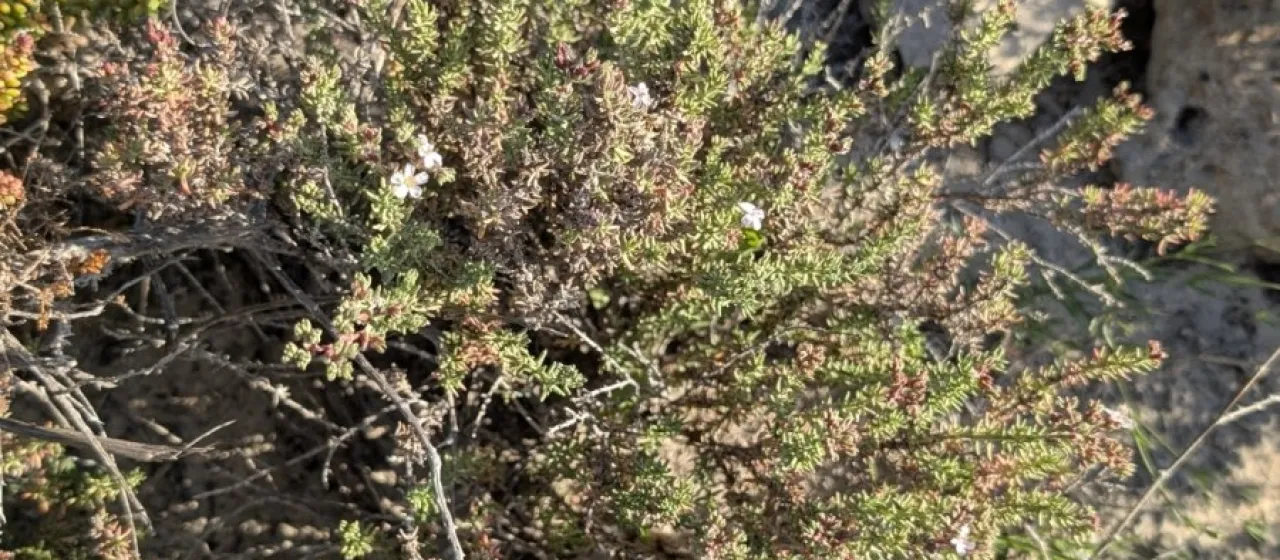
Botanically, the plant presents as a low-growing shrub with small, opposite leaves that closely resemble thyme, which explains its specific name. The base of the stem is woody, while the branches are thin and flexible. The plant produces small, delicate pink flowers during the growing season, contributing to its aesthetic appeal in dry-land horticulture.
Agricultural requirements focus on high solar radiation and well-drained soil. Unlike many other crops, it does not require fertile, salt-free soil; rather, it performs best in saline substrates. Proper establishment requires minimal irrigation during the early stages, after which the plant becomes largely self-sustaining and drought-resistant.
The practical application of this crop includes the stabilization of saline soils to prevent erosion and the use of the plant in xeriscaping. It serves as a valuable tool for phytoremediation, helping to stabilize mineral-rich substrates. The plant is resistant to most common pests due to its high salt accumulation, and diseases typically only manifest if the plant is subjected to poor drainage and waterlogging.