
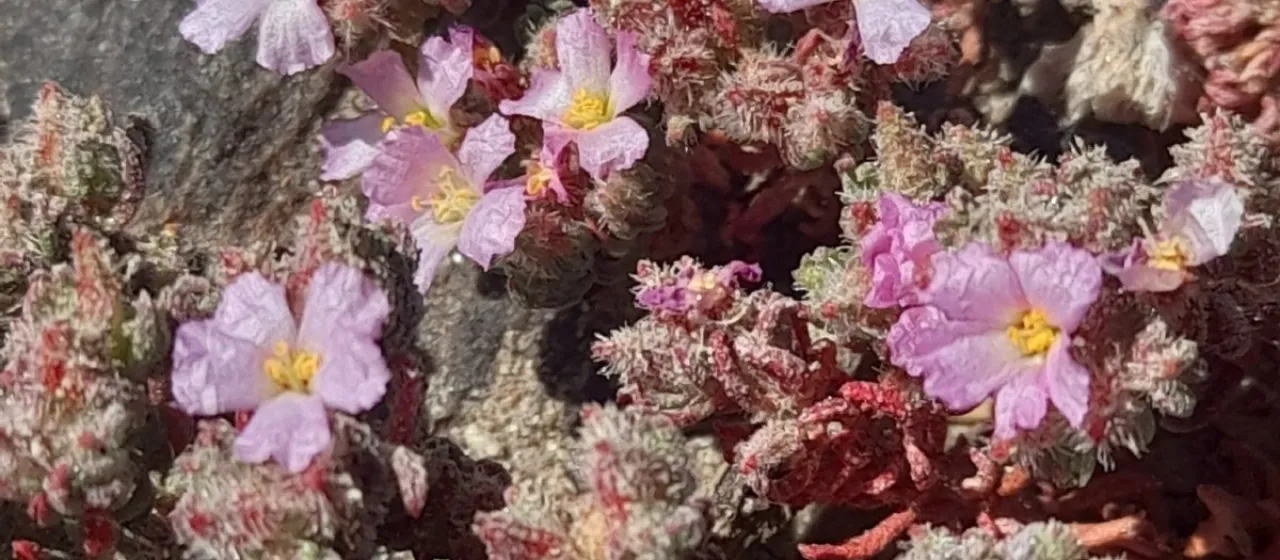
Description
Hairy sea heath (Latin Frankenia hirsuta) is a perennial herbaceous plant belonging to the Frankeniaceae family. As a highly specialized halophyte, this species has evolved unique physiological mechanisms to thrive in saline environments where standard crops would fail, making it a valuable candidate for specific agricultural and environmental restoration projects.
The plant originates from the arid regions of the Mediterranean, the Caucasus, and Central Asia. Its natural habitat is characterized by saline soils (solonchaks), sandy coastal areas, and stony slopes, where the species dominates due to its exceptional ability to manage high salt concentrations in the soil solution.
Botanically, the plant is recognized by its prostrate or ascending stems covered in fine hairs, which give the species its name. The leaves are small, leathery, and often revolute, providing a structural defense against water loss. During the flowering period, the plant produces delicate pink or purple blossoms that add significant visual value, alongside its ecological utility.
Cultivation requires full sun exposure and well-drained, sandy, or gravelly substrates. Its agronomy is centered on low-input management, as the plant is naturally adapted to nutrient-poor, saline conditions. Over-watering is the primary risk factor, as the species is intolerant of waterlogging and stagnant moisture around its root zone.
In terms of economic use, the primary applications include phytoremediation of degraded agricultural land, erosion control on arid plains, and stabilization of shifting dunes. In landscape architecture, it is increasingly valued for its ability to form dense, salt-tolerant mats in xeriscaping projects, providing a sustainable alternative to turfgrass in desert climates.
The plant demonstrates robust resistance to common agricultural pests and diseases. However, in poorly managed soil with inadequate drainage, root rot caused by soil-borne pathogens can occur. Minor infestations by arid-adapted mites may occur, but they rarely require chemical intervention under normal environmental conditions.