
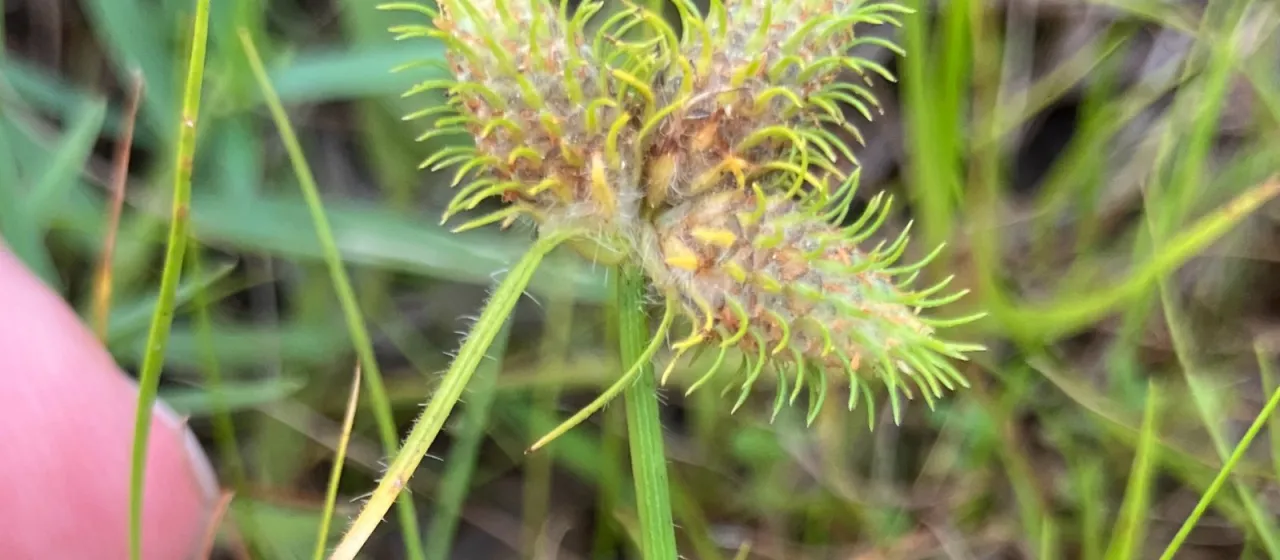
Description
Fuirena breviseta, commonly referred to by its botanical name, is a perennial herbaceous plant belonging to the Cyperaceae (sedge) family. In the field of agronomy, this species is recognized for its unique ability to thrive in wetland ecosystems, making it a valuable candidate for land management in saturated or flood-prone areas.
The plant is native to North America, where it typically colonizes coastal plains, marshes, and damp meadows. It is highly adapted to environments that experience frequent saturation, showing a remarkable resilience to soil conditions that are often too acidic or too waterlogged for standard forage crops.
Botanically, Fuirena breviseta is characterized by its erect stems and distinctive spikelets. The specific epithet breviseta refers to the short bristles found on its floral structures. The plant's root system is robust and fibrous, allowing it to anchor securely in soft, wet soils while effectively competing with other wetland vegetation.
Agronomic requirements are focused on maintaining high soil moisture levels. The crop performs best in acidic to neutral soils with organic matter. While it is naturally hardy, successful cultivation requires monitoring water table levels to ensure the plant does not experience prolonged drought stress, which can significantly reduce its biomass production.
The primary economic use of this plant includes habitat restoration, soil stabilization along water bodies, and serving as a forage resource for livestock in wetland pastures. Its ability to grow in nutrient-poor, waterlogged conditions allows land managers to utilize areas that would otherwise remain unproductive or prone to severe erosion.
- Excellent tolerance to prolonged flooding.
- Natural adaptation to acidic soil conditions.
- Effective root system for erosion control.
- Low input requirement for establishment.
As with many wetland plants, Fuirena breviseta may be susceptible to fungal infections during periods of stagnation where water circulation is insufficient. Integrated pest management practices, such as maintaining appropriate density and monitoring for localized pathogen outbreaks, are recommended to maintain the long-term health of the stand.