
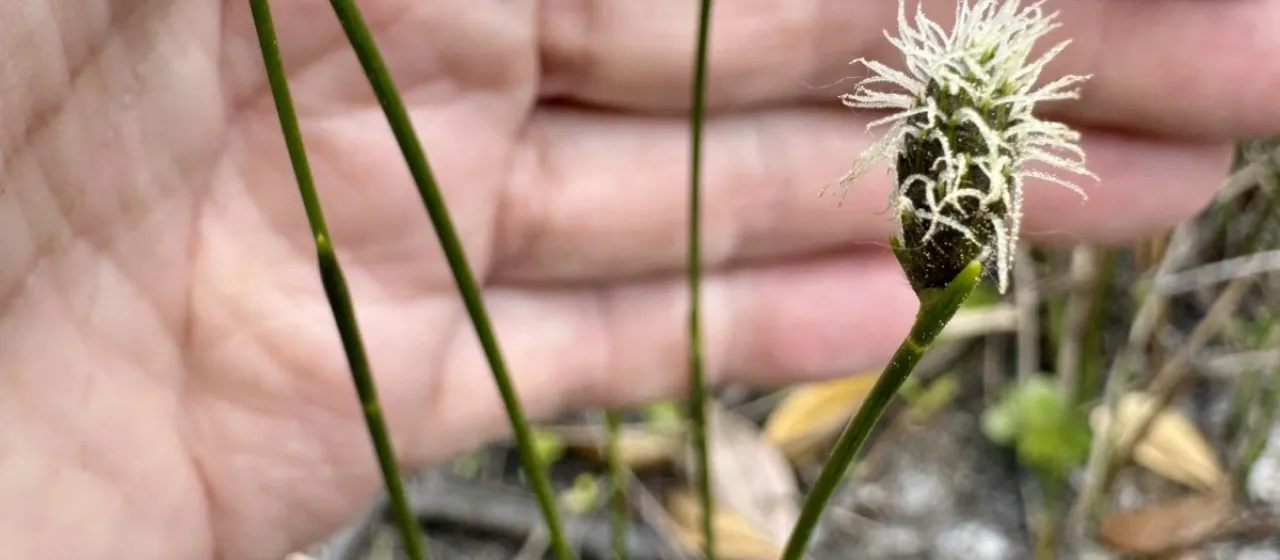
Description
Southern umbrella sedge (Fuirena scirpoidea) is a perennial herbaceous plant belonging to the Cyperaceae (sedge) family. This species is widely recognized for its adaptation to wetland environments, functioning as a primary producer in hydrological ecosystems where soil moisture levels remain consistently high throughout the growing season.
The plant is native to North America, particularly prevalent in the southeastern United States, including states like Florida and surrounding regions. It thrives in marshes, pond margins, and wet meadows with sandy or peaty soils. Its geographic distribution is closely tied to areas that experience periodic saturation or permanent wetness, defining its role in the local landscape.
Botanically, Fuirena scirpoidea is characterized by slender, erect stems that typically lack significant leaf blades. The plant propagates through a vigorous rhizomatous root system, which allows it to form dense colonies. Small, clustered spikelets at the top of the stems serve as the primary reproductive structures, emerging during the optimal climatic conditions of its native habitat.
Cultural requirements for managing this species focus on water retention and light availability. Since it is essentially a wild-growing species adapted to low-input management, it does not require significant fertilization. Key factors for successful maintenance include:
- Maintaining a high water table throughout the active growth period.
- Ensuring full solar exposure, as the plant does not thrive in shaded environments.
- Preventing competition from invasive woody species in the area.
- Managing grazing intensity to allow for periodic biomass recovery.
In terms of economic utility, the species is valued for its contribution to pasture forage in wetlands where traditional crops cannot survive. Furthermore, its role in ecological restoration is significant; the dense rhizome network makes it an excellent choice for stabilizing shorelines and filtering runoff water. It is rarely impacted by common agricultural pests, making it a robust component of sustainable wetland management programs.