
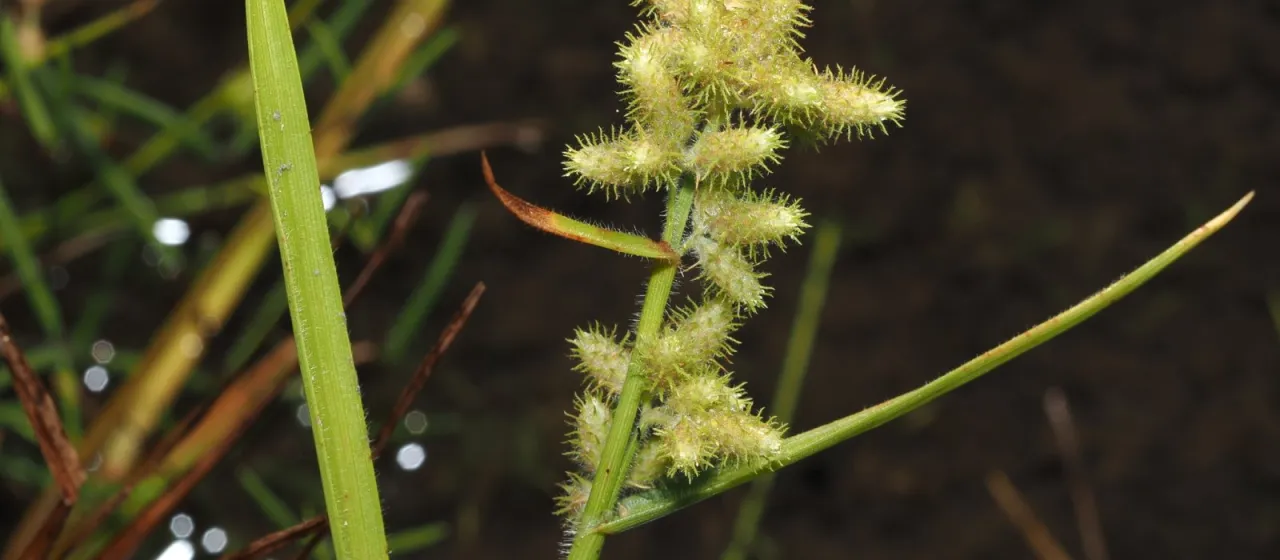
Description
Fuirena ciliaris is an annual herbaceous plant belonging to the Cyperaceae family. In agronomy, it is recognized for its adaptation to wetland environments, functioning as both a potential forage source in tropical regions and a significant vegetation component in rice-growing systems worldwide.
The native range of this species encompasses the tropical and subtropical zones of Africa, Asia, and Australia. It thrives in habitats characterized by high water saturation, such as riverbanks, seasonal wetlands, and irrigated agricultural landscapes. Its geographical spread is a testament to its high level of phenotypic plasticity in aquatic settings.
Botanically, the plant is distinguished by its hairy culms and clustered inflorescences. The root system is shallow but highly efficient at nutrient uptake in anaerobic soil conditions. Its growth cycle is optimized for high-temperature regimes, allowing it to complete its life cycle rapidly during the rainy season or in continuously flooded fields.
Cultivation requirements necessitate a constant water supply and nutrient-rich, silty or clayey soils. Agronomic management focuses on water level control to prevent overcrowding while maximizing biomass production. Fertilization programs often favor nitrogen supplementation, which drives the rapid development of vegetative stalks, enhancing the yield for subsequent use.
The agricultural utility of this species is diverse, ranging from its use as fodder for livestock, particularly in pastoral systems, to its potential in phytoremediation projects due to its ability to absorb excess minerals from aquatic substrates. It is also explored for its structural biomass potential in local artisanal applications, such as weaving or thatch creation.
Common issues include fungal infections triggered by humidity and stagnant water conditions, as well as infestation by specialized wetland insects. Integrated pest management (IPM) strategies, which include manipulating the water depth to disrupt the life cycles of pests, are the most effective methods for maintaining a healthy and productive crop stand.