
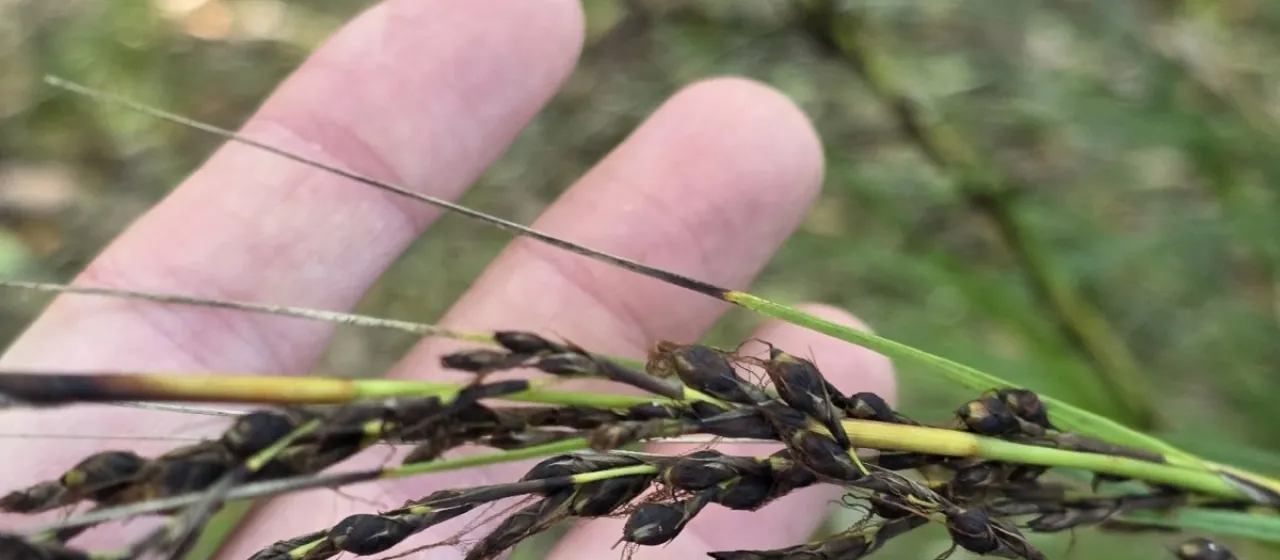
Description
Gahnia pauciflora, commonly known as a type of sedge, is a perennial plant belonging to the Cyperaceae family. In its native habitat, it grows in dense, tussock-forming clumps characterized by rigid, narrow leaves that can persist for several years. This species is recognized for its structural integrity and its significant role within the flora of its native region.
The plant is endemic to New Zealand and is found across a wide variety of habitats, including lowland forests, scrublands, and open hillsides. It thrives in various altitudes, displaying a remarkable ability to survive in diverse environmental conditions. Its prevalence in the wild reflects its evolutionary adaptation to the specific climatic and geographical characteristics of the New Zealand islands.
Botanically, the plant is distinguished by its sharp-edged, robust foliage that serves as a deterrent to herbivores. The inflorescences appear as dark, spike-like panicles that produce numerous seeds. The root system is deep and fibrous, which not only provides stability to the plant itself but also helps in stabilizing the soil in areas prone to slope movement or erosion.
For successful cultivation, Gahnia pauciflora requires well-drained soil with consistent moisture availability. While it is tolerant of poor soil conditions, it responds well to full sun exposure, which encourages denser growth. Standard horticultural care involves minimal intervention, primarily focusing on removing dead foliage to maintain the plant's health and appearance during the growing season.
Economically and practically, this species is widely utilized in landscape architecture for its architectural form and low-maintenance requirements. It is an excellent choice for stabilizing embankments and creating naturalistic landscapes that provide structure throughout the year. The plant is relatively resistant to common garden pests and diseases, provided that soil drainage remains adequate to prevent root rot.
- Excellent choice for low-maintenance landscaping.
- High tolerance to various soil types and slopes.
- Structural evergreen foliage provides year-round interest.
- Effective for ecological soil stabilization and erosion control.