
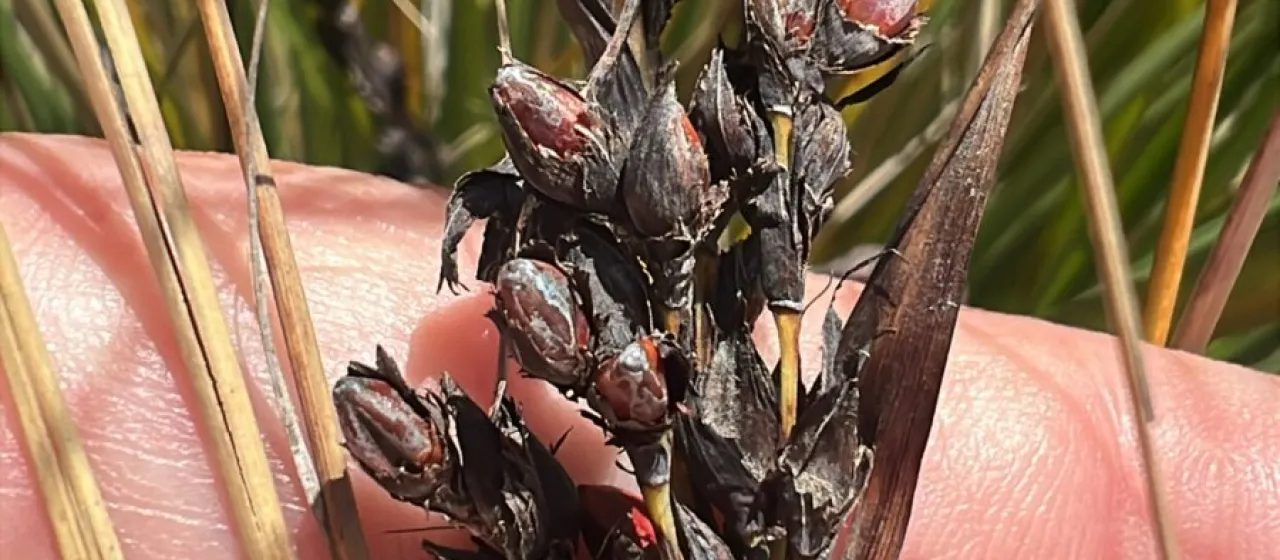
Description
Gahnia procera is a robust perennial herb belonging to the Cyperaceae family. It is widely recognized for its tough, grass-like appearance and its ability to form dense, expansive clumps that are highly valued in both natural habitats and controlled landscaping environments.
Native primarily to parts of Australia and Oceania, this species has evolved in regions characterized by temperate and subtropical climates. It typically occupies niches in moist forest understories, forest edges, and specialized habitats that provide consistent moisture throughout the growing season.
Botanically, Gahnia procera features long, rigid, arching leaves with sharp, serrated margins. Its inflorescence is a complex, elongated panicle that emerges above the foliage, displaying a distinctive structural aesthetic as the seeds mature. The plant's root system is deep and fibrous, contributing to its resilience.
Regarding agrotechnical requirements, the plant thrives in well-draining, acidic to neutral soil profiles. While it requires a moist environment, it is sensitive to waterlogging, which can lead to root degradation. It performs best in conditions ranging from full sun to partial shade, depending on the intensity of the regional climate.
Economically and ecologically, Gahnia procera is utilized for slope stabilization and soil erosion control, making it a valuable species for ecological restoration projects. Its maintenance involves occasional pruning of dead biomass to encourage new growth. Common pests include various lepidopteran larvae, while health issues are generally limited to fungal leaf spot diseases in poorly ventilated, overly humid conditions.