
Description
Common hemp-nettle (Latin: Galeopsis tetrahit L.) is an annual herbaceous plant belonging to the Lamiaceae family. Within agricultural practice, it is primarily recognized as a persistent weed found in cereal and vegetable crops, although its biological resilience makes it an interesting subject for weed science and ecological studies.
The origin of the species is traced back to the temperate regions of Europe and Asia. Over time, it has expanded its range across much of the Northern Hemisphere, adapting to diverse soil types. It is commonly found in arable fields, forest clearings, and disturbed grounds where soil moisture is sufficient and nitrogen levels are moderate to high.
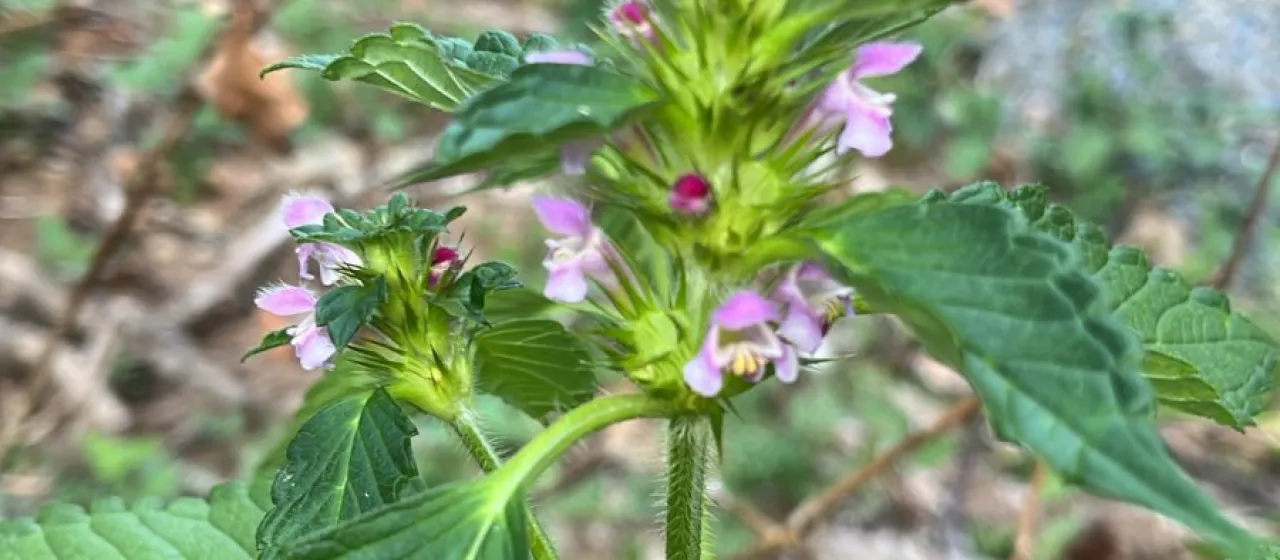
Botanically, the plant is characterized by a square stem that is swollen at the nodes and covered in stiff, bristly hairs. Its leaves are opposite, ovate-lanceolate, and serrated along the margins. The flowers, which emerge in the late summer, grow in axillary whorls and typically feature a purplish or pale pink corolla, making them easily identifiable in field surveys.
Agronomic requirements for this species are centered on its competitive nature. It thrives in temperate climates with adequate rainfall. Effective management involves a combination of mechanical techniques, such as early-season cultivation, and chemical control. Because the plant produces a high volume of seeds, prevention of flowering is critical to reducing the soil seed bank for subsequent years.
The economic utility of the common hemp-nettle is twofold. While it causes yield reductions due to resource competition, it is also documented as a valuable honey plant, attracting a variety of pollinators. Like many crops, it is susceptible to diseases such as powdery mildew and various rusts, and it can harbor pests like aphids, which necessitates monitoring if the plant is left in field margins.
- Growth habit: Annual herb.
- Flowering time: Summer to early autumn.
- Seed longevity: High, persisting in soil for several years.