
Description
Gamochaeta antillana is an annual herbaceous plant belonging to the Asteraceae family. Historically linked to the genus Gnaphalium, this species is now identified under its own genus, Gamochaeta. In agricultural systems, it is typically categorized as a weed that requires management due to its ability to proliferate in cultivated fields, pastures, and disturbed lands.
The plant is native to the Caribbean and tropical regions of the Americas, but it has naturalized in many warm-climate regions globally. Its adaptability allows it to colonize diverse environments, including roadsides, agricultural plots, and meadows. As a successful invasive species in certain regions, it can quickly establish dense populations if left unchecked by agricultural practices.
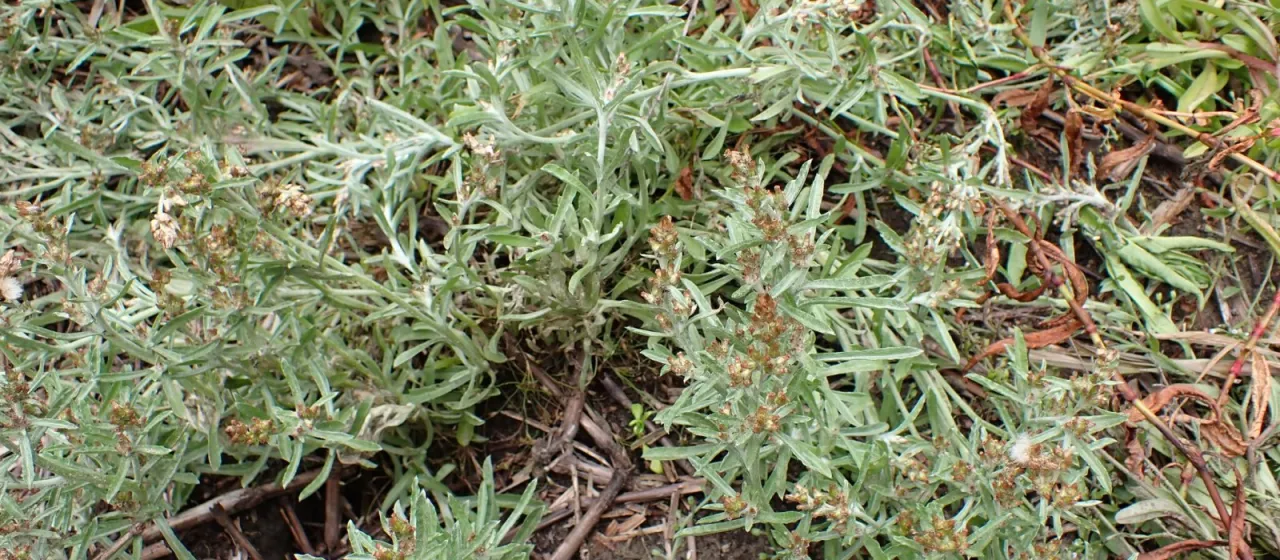
Morphologically, Gamochaeta antillana is characterized by its stems covered in dense, woolly, whitish hairs. The leaves are typically alternate and narrow, contributing to its overall silvery appearance. The small flower heads are arranged in spike-like or panicle inflorescences. Reproduction is highly efficient, as the seeds possess a pappus that allows for long-distance wind dispersal.
Regarding cultivation and environment, this species thrives in well-drained, sandy to loamy soils with high sunlight exposure. It is somewhat drought-tolerant but responds positively to adequate soil moisture during its vegetative cycle. Agronomic control involves integrated pest management, including mechanical weeding, crop rotation, and the application of herbicides, taking care to penetrate the plant's protective woolly coating.
From an agricultural use perspective, Gamochaeta antillana holds no significant value as a forage or technical crop. Its primary impact on farming is the depletion of soil nutrients and water, which can decrease the yields of primary crops. Furthermore, because it acts as an unwanted species in agricultural settings, farmers must monitor fields closely to prevent it from outcompeting young seedlings during the critical growth phases.
- High reproductive efficiency through wind-dispersed seeds.
- Ability to thrive in disturbed soil conditions.
- Woolly leaf coating complicates herbicide uptake.
- Competition with agricultural crops for nutrients.
- Wide environmental tolerance in temperate and tropical zones.