
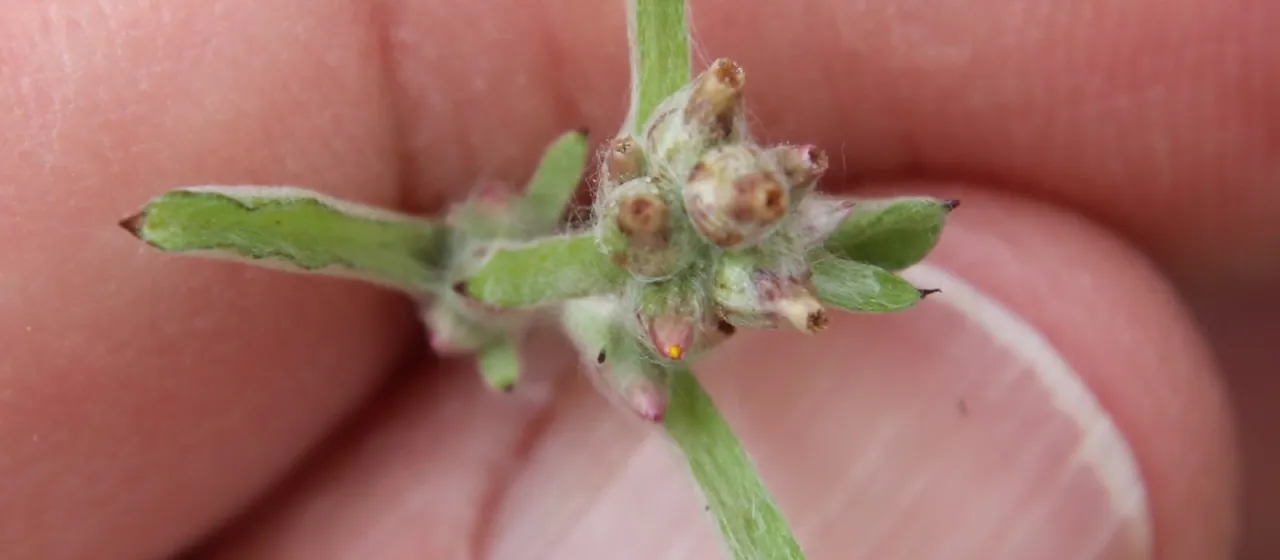
Description
Gamochaeta stagnalis is a herbaceous plant belonging to the Asteraceae family. While it is not typically categorized as a primary agricultural crop, it is a significant species in botanical studies and agricultural weed science, often requiring attention due to its presence in low-lying and damp cultivation areas.
Native to South America, the plant has successfully colonized various regions globally. Its preferred habitat includes moist soils, marshy borders, and areas with disturbed vegetation. In agricultural landscapes, it is often found in poorly drained fields where its rapid growth cycle allows it to compete with commercial crops for nutrients and sunlight.
Botanically, Gamochaeta stagnalis is distinguished by its white-tomentose (woolly) appearance, resulting from dense hair coverage on its foliage and stems. The plant produces numerous small capitula arranged in dense clusters. This morphological structure is highly efficient for seed dispersal, which is one of the main factors in its ability to spread across agricultural land.
From an agrotechnical perspective, management focuses on moisture control and mechanical disruption. Improving drainage systems and implementing timely cultivation are essential for reducing the population of this plant. Additionally, chemical control via pre-emergent or post-emergent herbicides is employed when the infestation threatens crop yields in water-retentive soil conditions.
The plant generally faces few pressures from pests or diseases due to its robust nature and chemical defenses. It is not cultivated for human consumption or livestock feed. However, identifying Gamochaeta stagnalis in the field serves as a biological indicator of soil water management issues, prompting farmers to re-evaluate their drainage and irrigation infrastructure.