
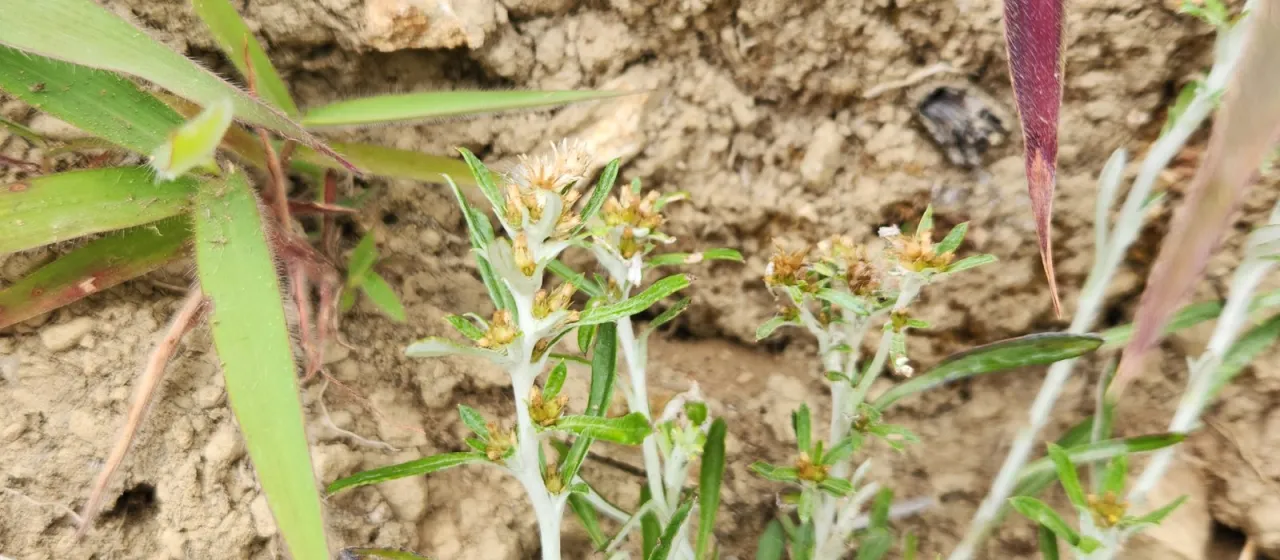
Description
Gamochaeta simplicicaulis, commonly known as simple-stemmed Gamochaeta, is a herbaceous plant within the Asteraceae family. While not a conventional agricultural crop, it is a plant of significant interest in weed science and ecology due to its potential impact on agricultural fields and pasture lands.
The plant originates from South America. Over time, it has expanded its range significantly, becoming naturalized in various parts of the world, particularly in temperate and subtropical zones. It thrives in disturbed soils, abandoned fields, and open areas, effectively exploiting niches where vegetation cover is sparse.
Botanically, it is distinguished by its erect stems covered in dense, silvery-white tomentose hairs. Its leaves are linear-lanceolate and alternate along the stem. This specific morphology is a structural adaptation to arid conditions, allowing the plant to retain moisture efficiently in high-light environments.
Regarding cultivation and management requirements, the species favors sandy or loose soil compositions with excellent drainage. It requires consistent sunlight for optimal development. Effective management strategies include:
- Regular mechanical cultivation to disrupt the growth cycle.
- Prevention of seed dispersal through early removal before flowering.
- Strategic grazing management in pastures to maintain competitive ground cover.
In terms of хозяйственного (economic) use, the plant is generally viewed as a weed that requires active suppression. It competes with forage crops for nitrogen and water. While it does not have widespread industrial applications, it serves as a subject for studies regarding invasive plant species control and the preservation of native biodiversity in agricultural landscapes.