
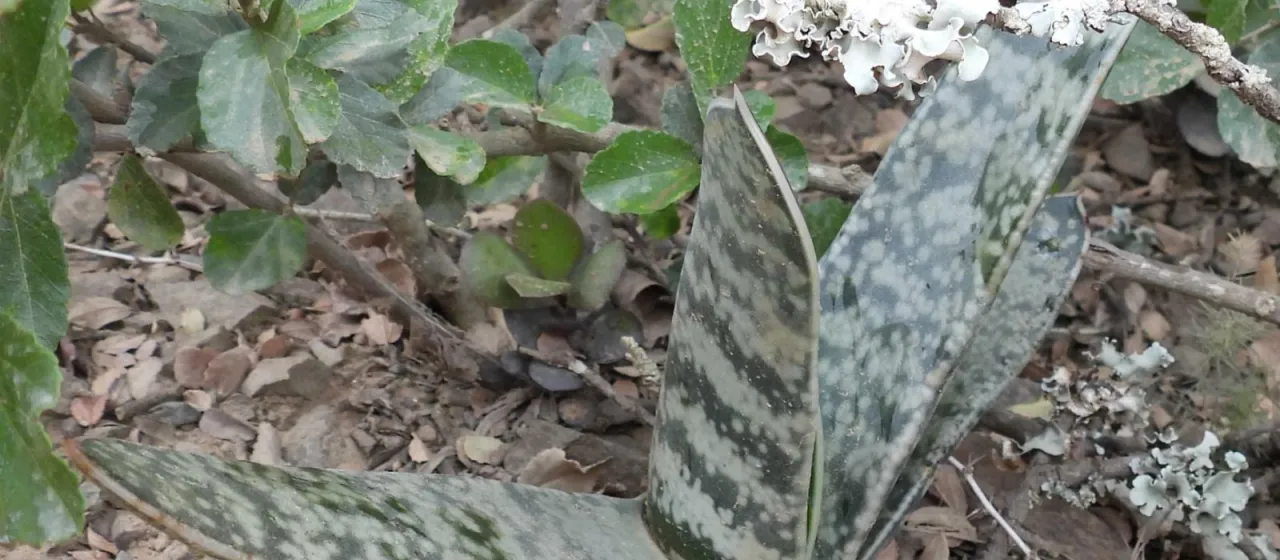
Description
Gasteria bicolor is a perennial succulent plant belonging to the Asphodeloideae subfamily within the Xanthorrhoeaceae family. Native to the Eastern Cape province of South Africa, this species has evolved to thrive in arid environments, often found in rocky crevices or under the shade of shrubs. It is widely recognized in horticulture for its distinct bi-colored foliage and architectural growth habit.
The plant exhibits a characteristic basal rosette of succulent, tongue-shaped leaves. These leaves are typically mottled with white spots, and their thickness serves as a vital water-storage mechanism. As the plant matures, it may produce offsets, allowing it to form dense clusters. The inflorescence consists of arching racemes with bell-shaped, reddish-pink flowers, which are highly attractive to pollinators in their native habitat.
Agrotechnical requirements for Gasteria bicolor focus on replicating its natural environment. It requires a well-draining substrate, such as a mix of pumice, perlite, and coarse sand. Overwatering is the most common mistake in cultivation, leading to root rot. During the growing season, watering should only occur when the soil has dried out completely. In winter, the plant enters a dormancy phase and requires very little to no irrigation.
In terms of хозяйственное (economic) utility, this culture is primarily used as an ornamental plant. It is highly favored in interior design due to its compact size, slow growth rate, and ability to thrive in indoor lighting conditions. It is also an important subject for succulent collectors and nursery production, where various cultivars are developed to showcase different leaf patterns and variegation intensities.
Common plant health issues involve fungal infections caused by high humidity or poor ventilation. Potential pests include mealybugs and spider mites, which can be managed by maintaining proper hygiene and using horticultural soaps or systemic insecticides when necessary. Regular monitoring of the foliage and substrate condition ensures the longevity and vitality of this resilient succulent species.
- Needs porous, high-drainage soil.
- Requires bright, indirect light to maintain patterns.
- Extremely sensitive to waterlogged conditions.
- Low fertilization requirements during the active growth phase.