
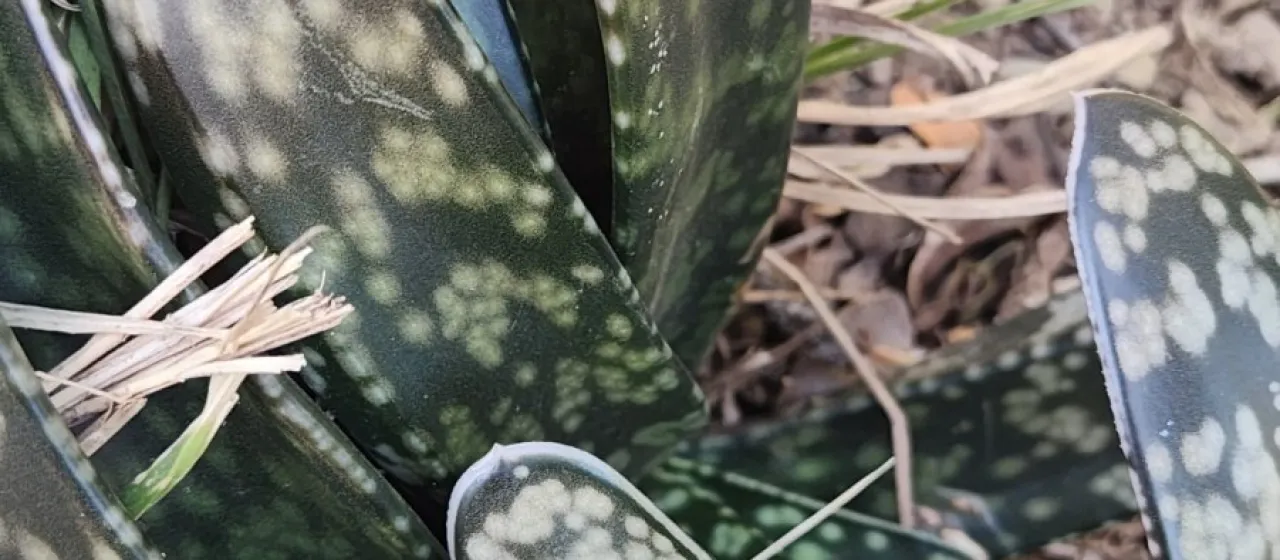
Description
Gasteria maculata, commonly known as the spotted gasteria, is a succulent plant belonging to the Asphodelaceae family. This species is highly regarded in horticulture for its distinct, tongue-shaped, spotted leaves that grow in a dense rosette. As a desert-adapted plant, it is known for its resilience and ability to thrive in restricted environments, making it a staple for indoor plant collections.
The plant originates from South Africa, particularly within the Cape region. In its native habitat, it grows in rocky crevices and amongst dense shrubbery, which protects it from the harsh, direct sun of the region. As an agricultural commodity in the nursery trade, it is propagated for its aesthetic value, requiring controlled conditions to mimic its natural environment while ensuring healthy growth and vibrant foliage patterns.
Botanically, Gasteria maculata is defined by its fleshy, succulent leaves which are somewhat stiff and feature a rough texture with light-colored, mottled spots. The root system is relatively shallow and sensitive, necessitating the use of wide, shallow containers that prevent water stagnation. The growth habit is generally slow, which contributes to its long-lived nature in captivity.
Cultivation requirements focus heavily on soil structure and water management. A well-draining, gritty cactus mix is essential to prevent root rot, which is the primary cause of failure in this species. While it prefers bright, indirect light, it can tolerate lower light levels than many other succulents. During the winter, the plant enters a dormant phase, requiring reduced water and cooler temperatures to prepare for the spring growth cycle.
Maintenance involves regular observation for common pests and diseases. The most frequent issues include:
- Root rot due to overwatering;
- Mealybug infestations hiding in leaf axils;
- Fungal infections triggered by poor air circulation.