
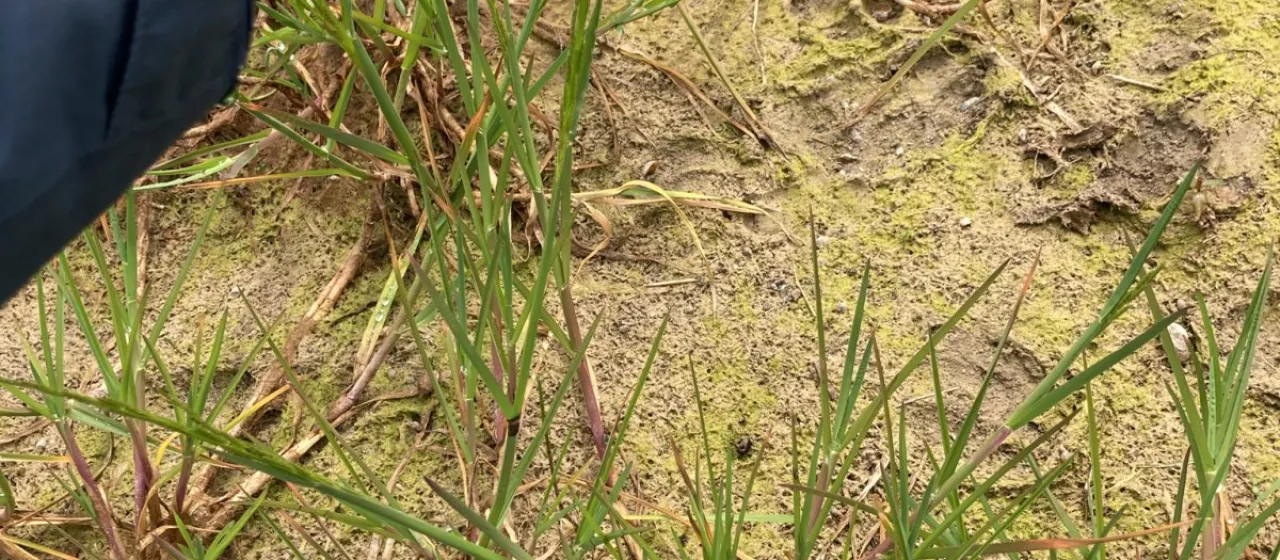
Description
Flote grass (Latin: Glyceria fluitans) is a perennial grass species belonging to the Poaceae family. It is distinctively hydrophilic, thriving in wet meadows, riverbanks, and marshy conditions where other crops struggle to survive. This grass is characterized by its remarkable ability to withstand prolonged submergence, making it a critical asset for agricultural land management in water-logged areas.
The native distribution of flote grass spans temperate regions of Europe, Asia, and North Africa. It naturally colonizes nutrient-rich, silty soils found in floodplains and along the edges of ponds. Its historical and agricultural importance lies in its role as a natural fodder source that effectively utilizes landscapes that are typically unsuitable for intensive field crop cultivation.
Botanically, Glyceria fluitans features creeping rhizomes and ascending stems that can reach up to one meter in height. Its flat, green leaves are often buoyant when submerged, and the inflorescence is a narrow, open panicle. The plant produces relatively large, nutritious seeds, which were historically harvested for human consumption, a practice from which the English name «manna grass» is sometimes derived.
The cultivation requirements for flote grass primarily center on soil moisture levels. It thrives in full sun and requires constant water availability to achieve high biomass production. In terms of agronomy, it is often managed as a permanent pasture component. Maintaining optimal nutrient levels, particularly nitrogen and phosphorus, can significantly enhance its growth rate and forage quality during the summer months.
The main agricultural use for flote grass is as high-quality forage for livestock. It is highly palatable and nutritionally dense, especially before it enters the reproductive stage. Furthermore, it serves as an excellent candidate for wetland ecological restoration and riparian zone stabilization, helping farmers mitigate soil erosion and manage the hydrology of difficult, low-lying parts of their farm property.
- Excellent tolerance to inundation and flooding.
- High nutritional value for cattle and horses.
- Natural propagation via rhizomes.
- Effective for erosion control in riparian zones.