
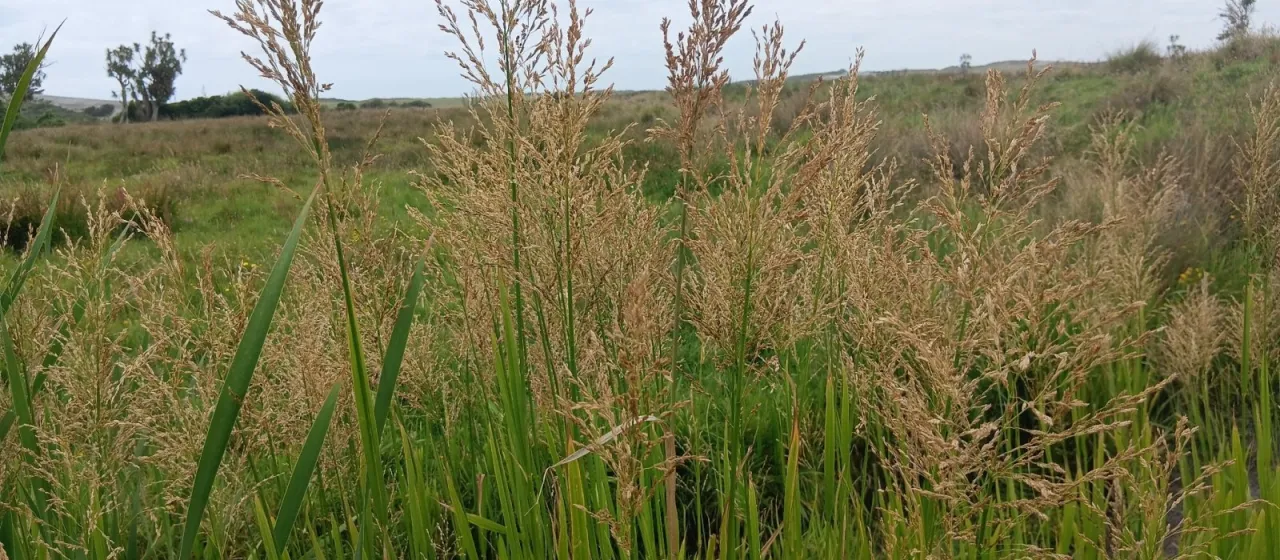
Description
Reed sweet-grass (Latin: Glyceria maxima) is a perennial grass species belonging to the Poaceae family. In agriculture, it is recognized as a robust, high-yield forage crop specifically adapted to wetlands, floodplains, and areas with stagnant or slow-moving water, where conventional crops fail to thrive.
Native to temperate regions of Eurasia, this species has established itself across diverse aquatic habitats. Due to its adaptability, it has been introduced to various parts of the world, including North America, where it is utilized for both forage production and ecological restoration projects in water-saturated environments.
Botanically, Glyceria maxima is characterized by its strong rhizomatous root system, which allows it to form dense, productive colonies. The culms can reach heights of up to 2 meters, supporting broad, vibrant green leaves and large, spreading panicles. Its growth strategy involves efficient nutrient uptake from wet, organic-rich substrates.
Successful cultivation requires minimal specialized tillage, as the plant thrives on saturated, silt-rich, or peaty soils. It exhibits excellent frost resistance and can survive prolonged submersion. For optimal feed quality, it is critical to harvest the grass before the heading stage, as the structural components of the stems harden rapidly once flowering begins.
The primary economic use is as high-quality forage for livestock, particularly in grazing systems on flood-prone pastures. Beyond agriculture, it serves vital roles in erosion control and wastewater purification. Potential threats include rust fungi and ergot, which are best managed by maintaining healthy stand density and timely harvesting cycles to minimize stagnant air conditions.