
Description
Gnidia polystachya is an evergreen perennial shrub belonging to the Thymelaeaceae family. Often recognized for its taxonomic significance, this species represents a unique branch of vegetation adapted to specialized environments, primarily serving as an object of botanical interest and niche ornamental horticulture.
The origin of this species is traced to the southern regions of Africa, where it thrives within the diverse landscapes of the Cape Floristic Region. It is naturally adapted to Mediterranean-type climates characterized by warm, dry summers and cool, wet winters, allowing it to survive in fire-prone scrubland habitats.
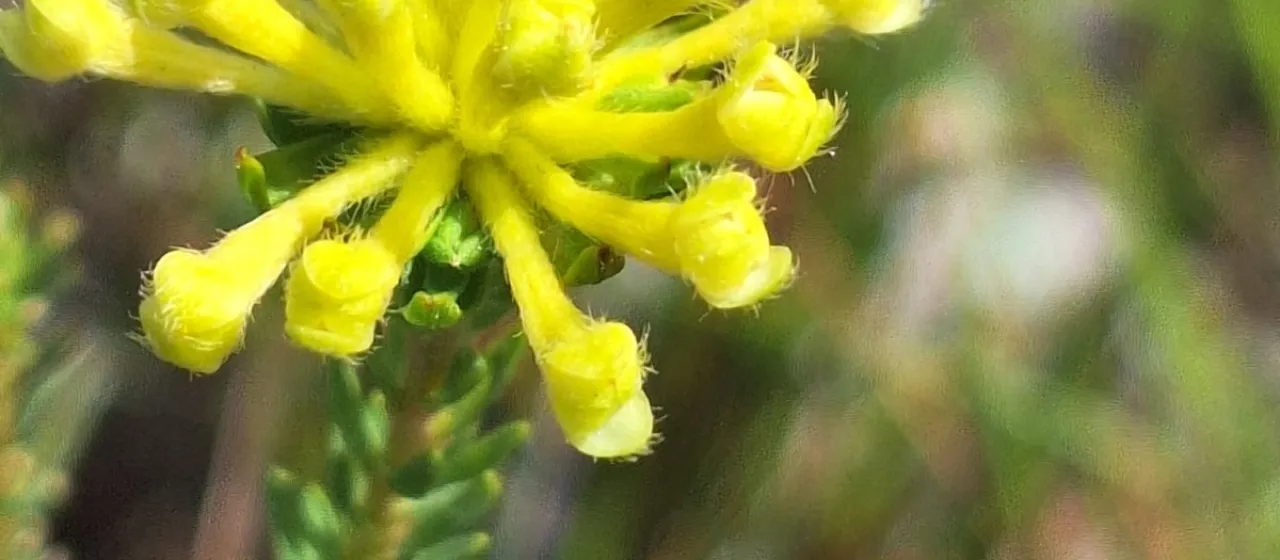
Botanically, the plant is distinguished by its dense, branching habit and narrow, linear leaves that exhibit xerophytic adaptations. The flowers are typically small and clustered at the terminals of the branches, showcasing the intricate morphological characteristics common to the Thymelaeaceae family members.
In terms of agricultural and horticultural requirements, Gnidia polystachya demands well-drained, nutrient-poor, acidic to neutral soils. It is highly sensitive to root rot, necessitating precise irrigation management. The plant flourishes in full sun, requiring excellent airflow to mimic the natural windy conditions of its native habitat.
- Requires coarse, well-draining substrate.
- Sensitive to high humidity levels.
- Best suited for Mediterranean climates.
The primary utility of the species lies in xeriscaping and botanical collections. While generally resilient, the plant is susceptible to typical horticultural pests such as spider mites in greenhouse settings and fungal pathogens if drainage is compromised. Effective maintenance involves minimal intervention and careful monitoring of soil moisture levels.