
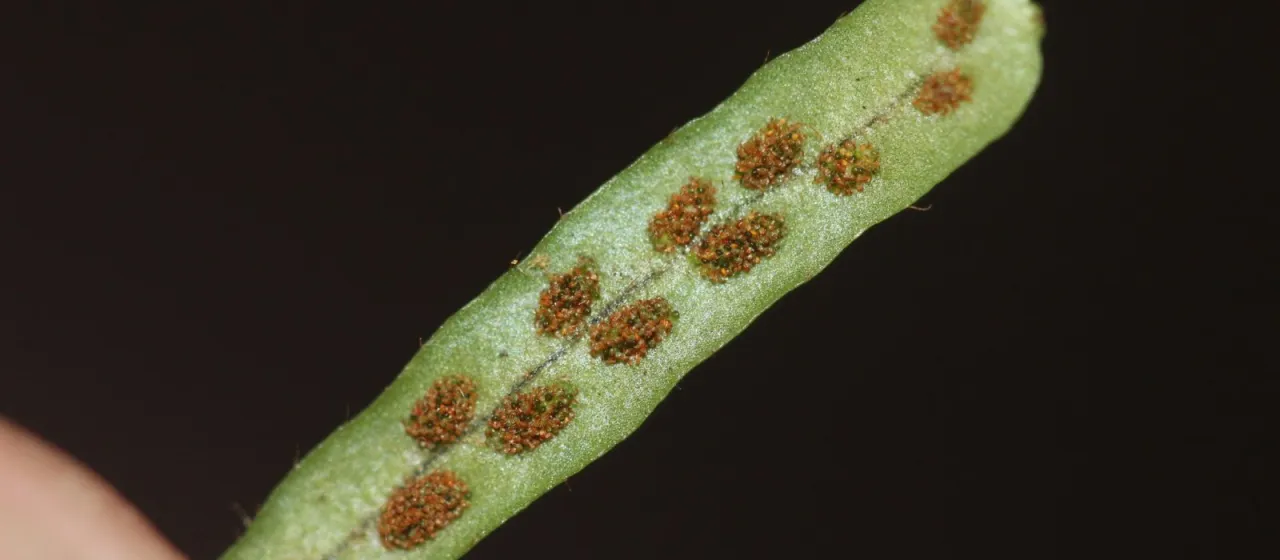
Description
Grammitis ciliata is a perennial fern species belonging to the family Polypodiaceae. This plant typically grows as an epiphyte or lithophyte, meaning it establishes itself on the bark of trees or within crevices of rocky surfaces in humid tropical environments, where it can access moisture and organic debris.
The native range of this species is concentrated in the high-altitude cloud forests of South America. These regions are characterized by consistent moisture levels and relatively mild temperatures, which are essential for the survival of this fern. It is rarely grown commercially but remains a subject of study and interest among botanical enthusiasts and collectors of rare ferns.
Botanically, Grammitis ciliata is recognized by its narrow, linear-lanceolate fronds that feature distinctive ciliate margins, which give the plant its scientific name. Its rhizome is short and creeping, often covered with small scales. The reproduction occurs via spores produced in exposed sori located on the undersides of the fronds, dispersed by wind and water droplets in its native habitat.
In terms of cultivation, the plant demands a highly controlled microclimate. It requires high relative humidity (ideally over 75%) and bright but diffused light, avoiding any direct sun exposure. The growing medium must be highly porous, mimicking natural epiphytic conditions, such as a mix of orchid bark, long-fiber sphagnum moss, and charcoal to provide adequate root aeration.
Management of the plant focuses heavily on disease and pest prevention. Common threats include infestations of spider mites or scale insects, which often occur when environmental humidity drops below recommended levels. Root rot, caused by fungal pathogens, is the primary disease risk, often triggered by waterlogged substrate. Providing a balance of moisture and airflow is the cornerstone of successful Grammitis ciliata maintenance.