
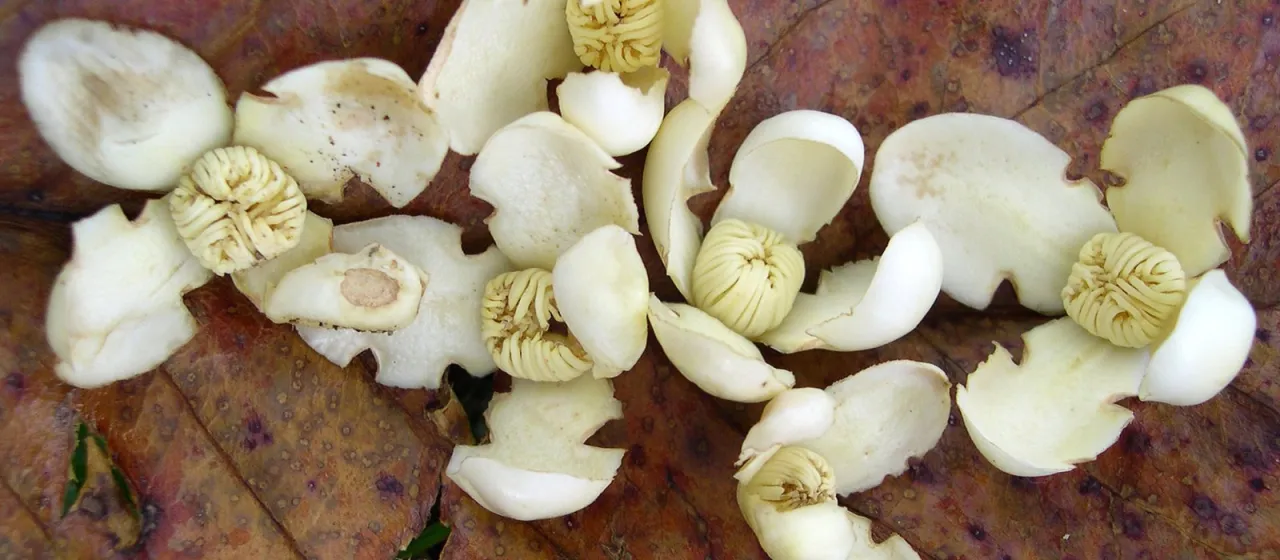
Description
The Grias cauliflora, commonly referred to as the anchor tree, is a unique tropical plant belonging to the Lecythidaceae family. It is best known for its cauliflorous nature, where the tree produces beautiful, aromatic flowers and fruit directly from its main trunk and woody stems rather than from the terminal leaf-bearing branches.
Native to the rainforests of Central and South America, particularly regions in Colombia, Ecuador, and the Caribbean, this tree thrives in swampy environments and riparian zones. Because of its preference for highly specific moisture levels and consistently warm temperatures, the anchor tree is primarily found in tropical habitats, where it serves as a source of food and shelter for local wildlife.
Botanically, the plant features large, dark green, glossy leaves that crown its relatively slender trunk. The fruit is a drupe, which is oblong and turns brown when mature. Inside, it contains a single large seed surrounded by flesh that is typically consumed after cooking. The tree can reach significant heights under optimal conditions, though its growth rate is generally slow compared to other tropical fruit species.
Cultivation of Grias cauliflora requires a tropical climate with high humidity and temperatures that do not fluctuate significantly below 20°C. The soil should be deep, rich in humus, and capable of holding moisture while maintaining sufficient porosity. It is generally not suitable for container gardening unless managed in a greenhouse with strict climate control, as the tree requires substantial space for its root system to develop properly.
Regarding its utility, the anchor tree is primarily a subsistence crop. Its seeds, often compared in flavor to Brazil nuts or walnuts, are a notable food source once roasted or boiled. While not a major commercial crop, it is an interesting botanical specimen for tropical gardens. Diseases are typically limited to fungal infections resulting from poor drainage or excessive humidity in stagnant air, and pests include common tropical scale insects and borers that are typically managed via manual removal or organic treatments.