
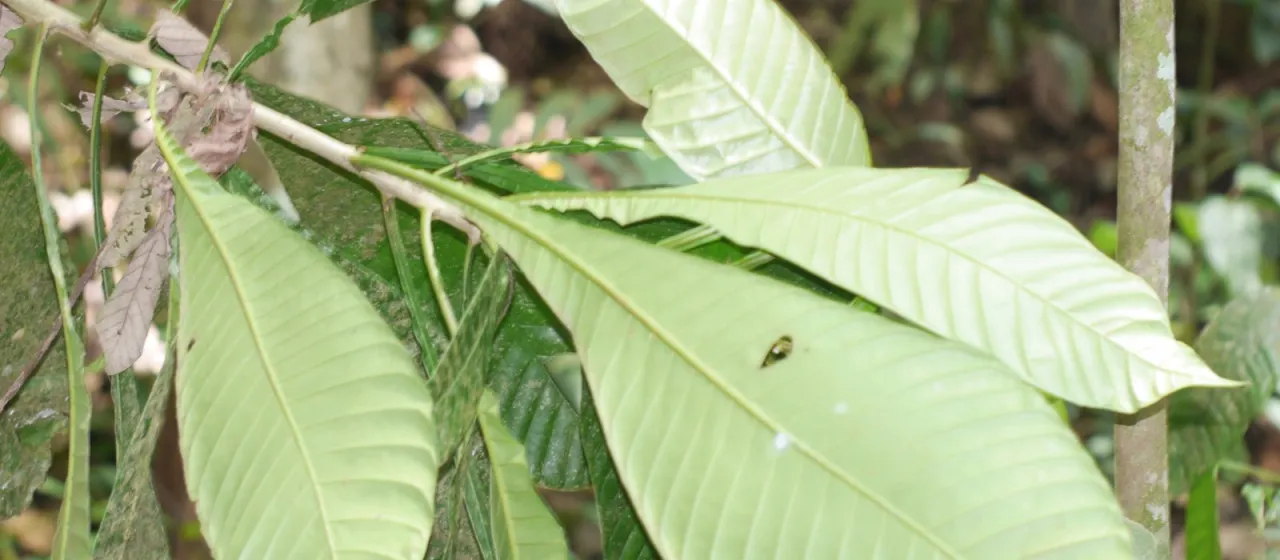
Description
Grias peruviana is an evergreen tree species belonging to the Lecythidaceae family. Known for its distinct botanical characteristics, it thrives in the unique ecosystem of South American rainforests. It is closely related to other tropical nut-bearing trees in its family, sharing similar growth habits and ecological requirements.
The native distribution of this species is centered in the tropical regions of the Amazon basin, specifically covering parts of Peru, Colombia, and Ecuador. The tree is typically found in alluvial forests and areas that experience periodic flooding. This geographical preference dictates its cultivation requirements, as it demands high humidity and consistently moist, well-draining soil.
Botanically, the tree is recognized for its large, elongated fruits and thick, leathery leaves clustered at the branch tips. A key feature is cauliflory, where flowers and fruits emerge directly from the main trunk or older stems, a biological adaptation common in tropical plants. The flowers are generally large, showy, and rich in nectar, attracting specialized tropical pollinators.
Agricultural management of Grias peruviana focuses on maintaining stable tropical conditions. The soil must be nutrient-dense, preferably composed of rich organic matter. It is a slow-growing species, and in cultivation, it requires protection from intense wind and direct high-noon sun, especially during its early developmental stages.
- Nutrient-rich fruit pulp.
- Adaptability to flooded soil environments.
- Hardy trunk structure used for local wooden tools.
- Significant role in forest biodiversity.
Economic and household use is primarily localized. The fruits are consumed for their nutritional value, containing essential fats and minerals. While not widely cultivated as a global commercial crop, Grias peruviana serves as a sustainable source of food for indigenous communities. Research into its cultivation continues to explore its potential for enrichment planting in agroforestry systems.