
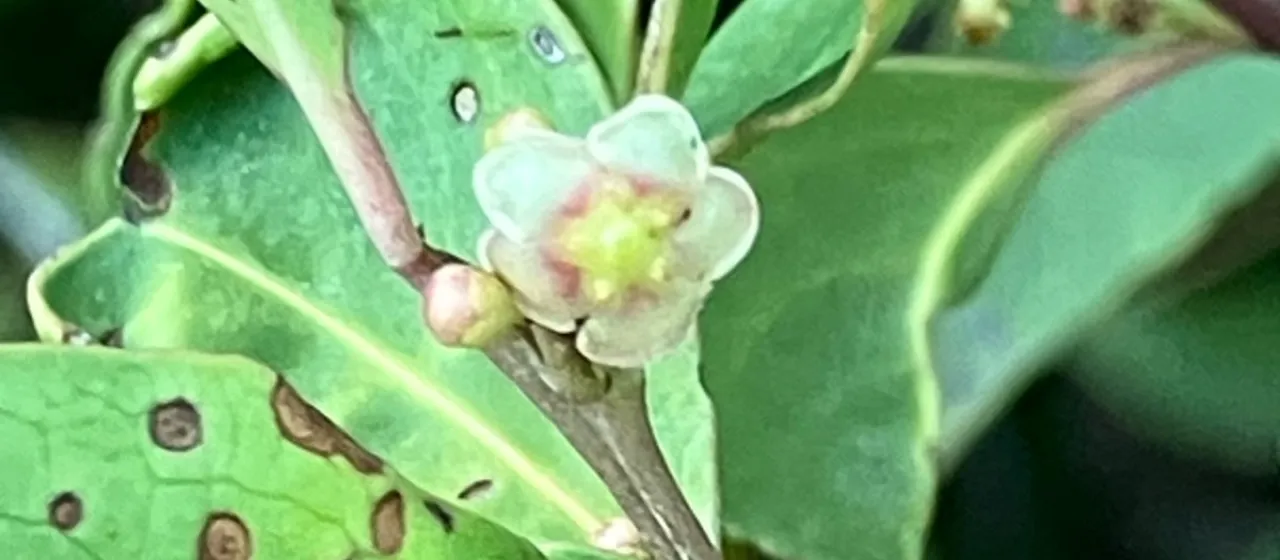
Description
Gymnosporia acuminata, commonly referred to as the Silky-bark or common spike-thorn, is a perennial plant within the Celastraceae family. It is a robust evergreen tree or shrub known for its architectural form and dense, dark green foliage, which makes it a popular choice for specialized ornamental gardens and ecological restoration projects.
Native to the southern and eastern regions of Africa, this species thrives in diverse habitats ranging from forest margins to rocky hillsides. Its natural distribution demonstrates a high level of resilience to environmental fluctuations, allowing it to adapt to various ecological niches within its native range where frost is minimal.
Botanically, the plant is distinguished by its sharp spines and pointed leaves, which provide effective defense mechanisms in the wild. Its flowering cycle produces clusters of inconspicuous but attractive flowers that are often followed by small, distinctive capsules. The overall growth habit is upright, making it suitable for hedging or specimen planting.
Regarding cultivation, Gymnosporia acuminata requires well-drained soil and a location with significant light exposure to maintain its vigor. While it is relatively drought-tolerant once established, supplemental irrigation is recommended during the first year of growth. Regular pruning helps in shaping the shrub and stimulating denser foliage production.
Its economic and practical use is primarily centered on landscaping. It is frequently employed in xeriscaping due to its water-wise characteristics. In traditional settings, parts of the plant have been recognized for their durability, and the wood has been utilized for small-scale carpentry, reflecting the plant's historical significance in local crafts.
Common pests and diseases to monitor include:
- Scale insects which can cluster on stems and leaves.
- Spider mites during periods of prolonged drought or heat.
- Fungal infections triggered by poor air circulation.
- Root rot caused by waterlogged soil conditions.