
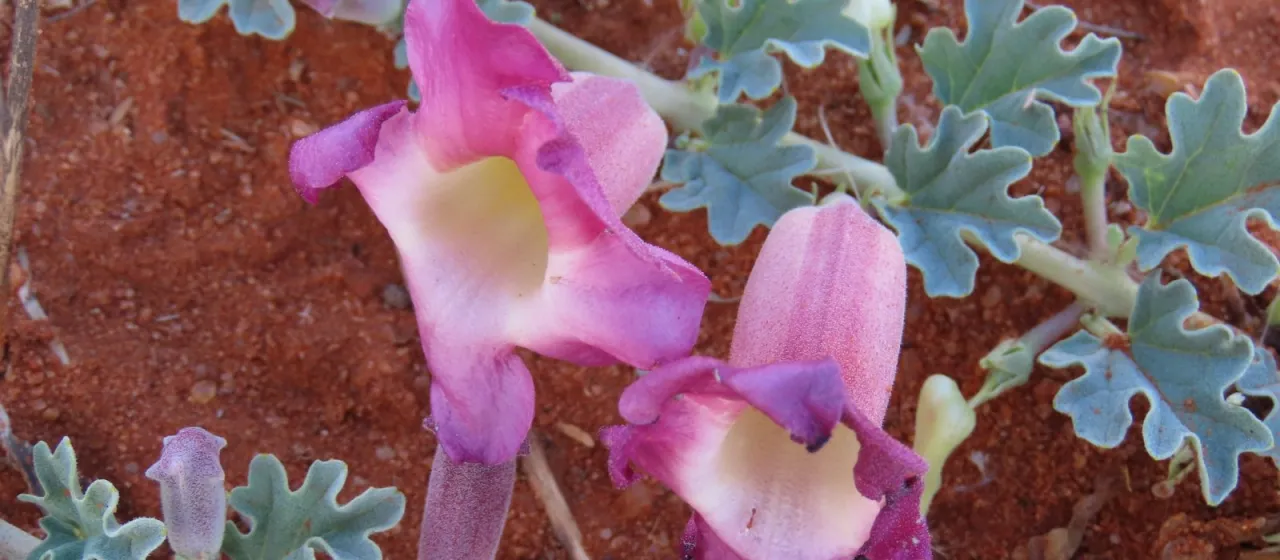
Description
Harpagophytum procumbens, commonly known as Devil's Claw, is a perennial flowering plant belonging to the Pedaliaceae family. It is distinguished by its unique fruit, which is covered with woody, hooked spines that cling to the fur of animals, facilitating seed dispersal in its native habitat.
The plant is endemic to the arid regions of southern Africa, specifically thriving in the Kalahari Desert and the savannas of Namibia, Botswana, and South Africa. This species has evolved to withstand extreme heat and prolonged droughts by developing an extensive root system that includes large, fleshy secondary tubers used to store nutrients and water.
Botanically, the plant features trailing stems that spread across the ground, originating from a perennial taproot. The growth cycle is synchronized with seasonal rainfall, with plants entering a dormant phase during the cooler, drier periods to survive the harsh environmental conditions of the region.
Successful cultivation requires specific soil conditions, primarily loose, sandy, and well-draining substrates. The plant is extremely susceptible to root rot, making strict water management essential. Furthermore, it requires high intensity of sunlight and specific heat units to facilitate the development of the secondary tubers which are the main harvestable parts.
The primary economic value of Harpagophytum procumbens lies in its medicinal properties. The tubers are harvested and processed into extracts containing high concentrations of harpagosides. These compounds are widely recognized in the pharmaceutical industry for their potent anti-inflammatory and analgesic effects, particularly in the management of osteoarthritis and lower back pain.