
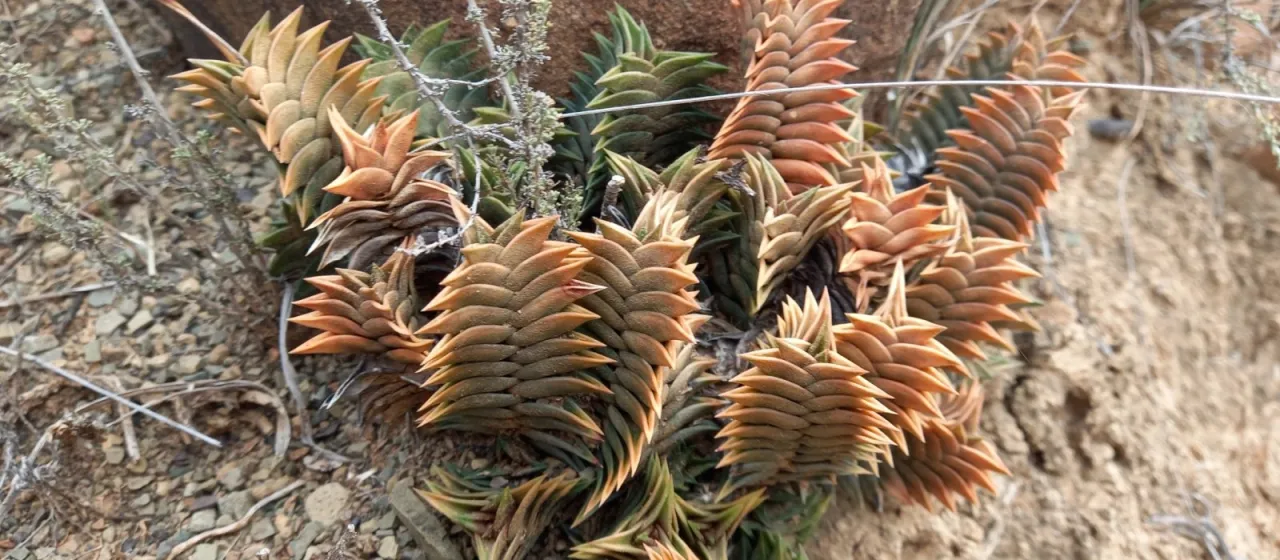
Description
Haworthiopsis viscosa is a perennial succulent plant belonging to the Asphodelaceae family. Previously classified under the Haworthia genus, it is now recognized for its distinct morphological traits that set it apart. Known for its rigid, column-like growth habit, it is a prized species among succulent enthusiasts and botanical collectors.
The native distribution of this species is centered in the Cape Province of South Africa. In its natural environment, the plant thrives in arid, rocky outcrops where drainage is excellent. This adaptation allows the plant to survive in nutrient-poor substrates and endure prolonged drought periods by storing water within its specialized leaf tissues.
Botanically, the plant is characterized by its leaves which are arranged in three vertical rows, forming a distinct spiral column. The leaf surfaces are often rough or tuberculate, displaying colors that range from deep green to brownish tones, especially when exposed to high light intensity. The growth rate is slow, and the plant naturally propagates by producing basal offsets.
Cultivation requirements for Haworthiopsis viscosa necessitate a porous, mineral-rich substrate to prevent root rot. It requires bright, indirect sunlight to maintain its compact shape; inadequate light leads to etiolation. Watering should be sparse, allowing the soil to dry out completely between sessions to mimic the natural cycles of its native habitat.
The primary use of the plant is ornamental, commonly utilized in xeriscaping or as an indoor container plant. In terms of plant health, it is generally robust, although it can be susceptible to common succulent pests such as mealybugs and root aphids. Maintaining good ventilation is essential to preventing fungal infections, which remain the most significant threat to the plant's health.