
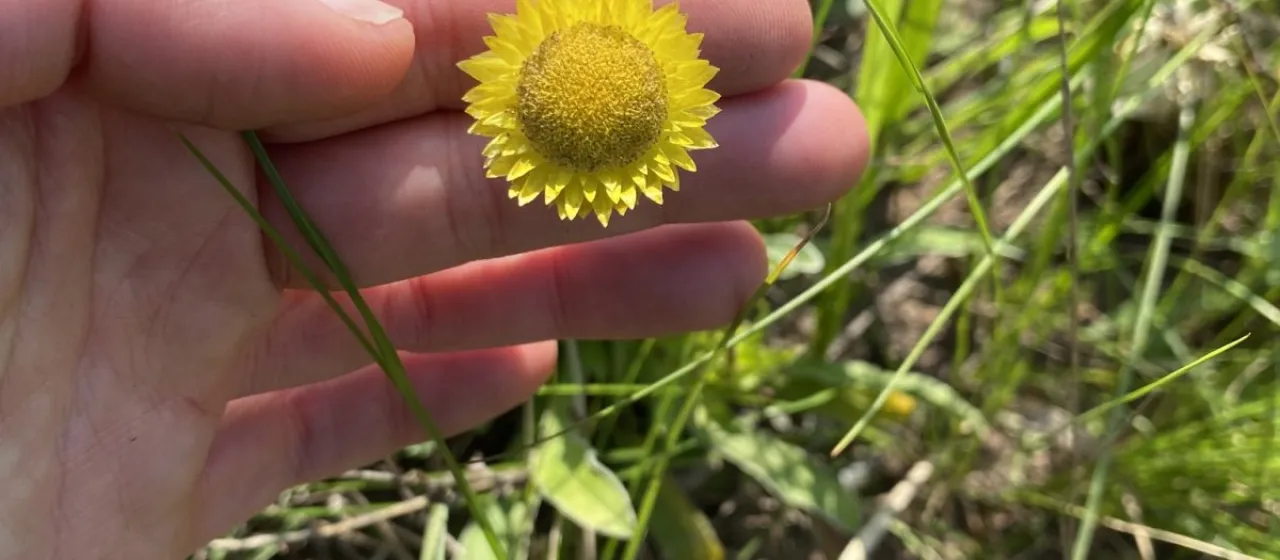
Description
Golden everlasting (Latin Helichrysum aureum) is a perennial herbaceous plant belonging to the Asteraceae family. Known primarily for its resilience and unique aesthetic appeal, this plant has gained recognition as a specialized crop for the dried flower industry due to the durability of its golden-hued inflorescences.
Originating from the Southern regions of Africa, this species is naturally adapted to high-altitude environments and arid landscapes. Its ability to thrive in challenging conditions makes it a potential candidate for cultivation in regions with similar Mediterranean or semi-arid climates where water efficiency is a priority.
Botanically, Helichrysum aureum is characterized by its silvery, pubescent foliage and striking golden flower heads. These features serve as an adaptation to retain moisture and reflect excessive sunlight. The plant develops a robust root system, allowing it to survive periods of limited rainfall while maintaining its structural integrity.
The agronomic requirements for golden everlasting focus on well-draining, sandy or loamy soils with a slightly acidic to neutral pH. Excessive moisture is detrimental to the plant, making soil aeration and proper drainage critical. Full sun exposure is necessary to ensure optimal development of the inflorescences and to maintain the vibrant colour of the flowers.
In terms of agricultural use, this crop is grown primarily for the decorative market. The flowers are harvested at the peak of their maturity to ensure longevity during the drying process. Beyond decorative purposes, the plant has been traditionally studied for its potential medicinal properties, particularly in regions where it grows natively.
- Requires high levels of sunlight.
- High tolerance to drought conditions.
- Highly sensitive to root rot due to moisture.
- Ideal for the dried flower industry.
Typical plant health issues include fungal diseases such as gray mold and fusarium wilt, which often occur if planting density is too high or soil moisture is poorly managed. Common pests affecting the crop include aphids and spider mites, which can be controlled through integrated pest management techniques, including regular field monitoring and targeted insecticide application.