
Description
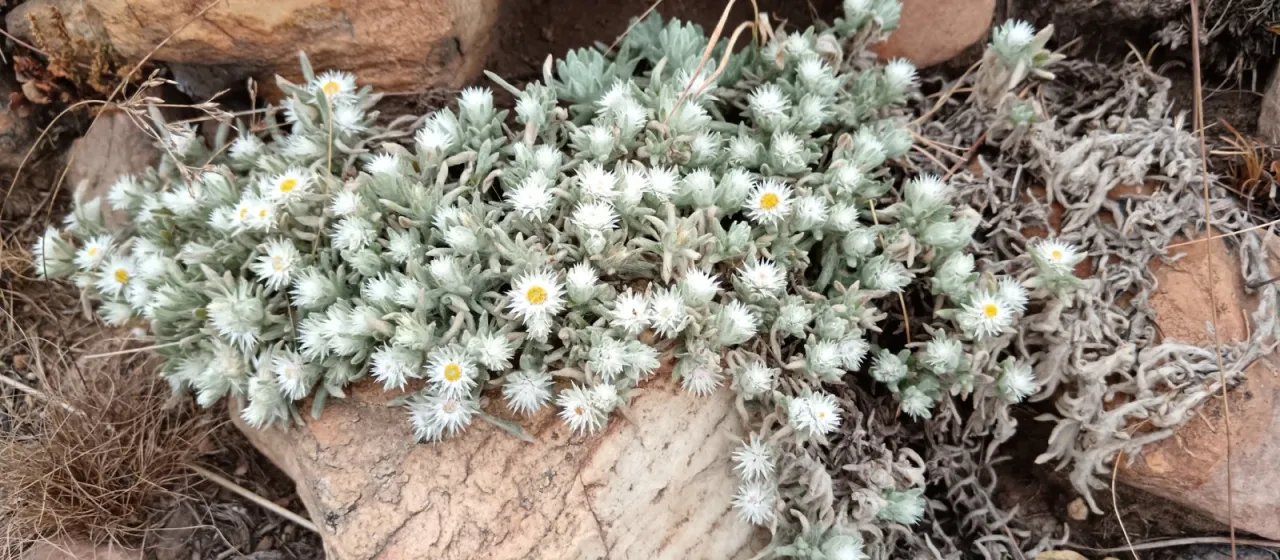
Helichrysum cerastioides is a perennial herbaceous plant belonging to the Asteraceae family. Known for its distinct silvery-grey, woolly foliage, it serves as a highly desirable subject for rock gardens and dry, sunny borders where its compact growth habit provides year-round aesthetic appeal.
The native distribution of this species is centered in the high-altitude regions of the Himalayas, spanning across northern India, Nepal, and Bhutan. Growing in alpine meadows and rocky outcrops, the plant has developed a strong resistance to harsh, windy conditions and intense ultraviolet radiation.
Botanically, the plant forms a low-growing mat of foliage with small, daisylike flower heads. Like other members of the genus Helichrysum, the flowers feature papery, everlasting bracts that do not fade easily. This characteristic is an evolutionary adaptation that allows the plant to protect its reproductive structures in volatile mountain weather.
Agrotechnical requirements focus on excellent drainage and exposure. The species thrives in poor, gritty soils and requires full sun to maintain its silver foliage color and compact form. Over-fertilization should be avoided, as it leads to weak, leggy growth that reduces the plant's natural resistance to cold and moisture.
- Perfect for xeriscaping and alpine garden designs.
- Extremely drought-tolerant once established in the garden.
- High sensitivity to winter wetness and heavy clay soils.
- Minimal maintenance needs regarding pruning and feeding.
The primary use is ornamental, specifically in rock garden collections or as a groundcover in specialized gravel beds. The plant is generally free from major pests and diseases, provided that the soil conditions remain lean and fast-draining. Root rot remains the only significant issue if the drainage is insufficient during dormant months.