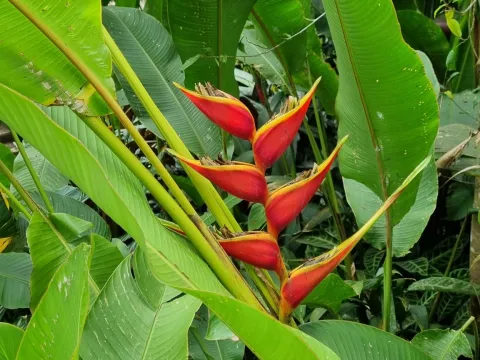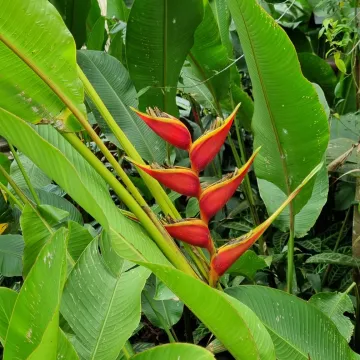
Heliconia stricta
Heliconia stricta Huber
Description
Heliconia stricta (Heliconia stricta Huber) is a perennial herbaceous plant belonging to the Heliconiaceae family. It is recognized for its architectural form and striking, waxy inflorescences that make it a favorite in tropical ornamental horticulture. In its native habitat, it forms dense, clump-forming stands that contribute to the lush structure of the forest understory.
The plant originates from the tropical regions of South and Central America, including the Amazon basin and parts of Colombia. It is commercially grown in tropical climates worldwide, where it thrives in high-temperature, high-humidity environments. Given its sensitivity to frost and cold drafts, cultivation in temperate zones is restricted to climate-controlled greenhouses or specialized indoor facilities.
Botanically, the plant is characterized by rhizomatous roots and large, banana-like leaves that add significant biomass to the landscape. The inflorescences consist of brightly colored, boat-shaped bracts arranged in an upright, rigid formation. These bracts are the primary ornamental feature, as they protect the small, true flowers and provide long-lasting color ranging from vibrant reds to bright yellows.
Successful cultivation requires attention to soil composition and water management. The plant prefers rich, well-draining organic soils with a slightly acidic pH. Consistent irrigation is essential to mimic natural tropical rainfall, but waterlogging must be avoided to prevent root diseases. Fertilizer application, particularly nitrogen-rich blends during the growing season, is recommended to ensure robust foliage development and consistent blooming.
In commercial agriculture, Heliconia stricta is primarily produced for the high-end cut flower market, valued for its vase life and exotic appearance. Maintenance protocols must include integrated pest management (IPM) to control common tropical pests:
- Spider mites, which thrive in low-humidity greenhouse conditions.
- Scale insects that adhere to stems and leaves.
- Mealybugs hiding in leaf axils.
- Rhizome rot resulting from inadequate soil drainage.
Photo gallery