
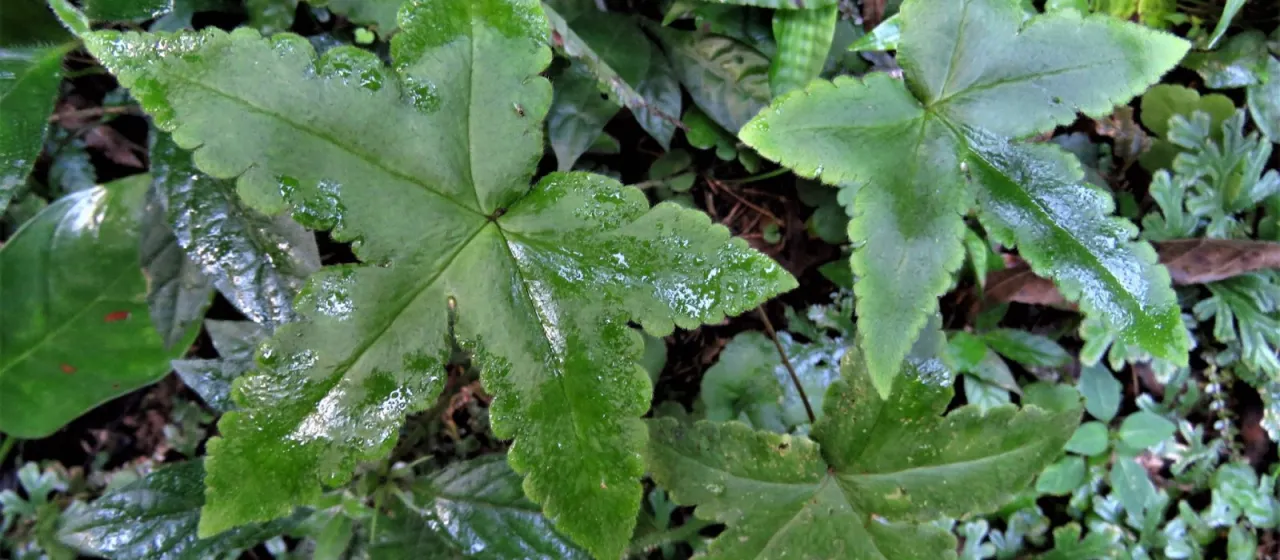
Description
Hemionitis palmata, commonly known as the strawberry fern, is a species of fern belonging to the Pteridaceae family. This distinctive plant is celebrated for its palm-shaped or heart-shaped fronds, which make it a highly desirable specimen for botanical collections and interior landscaping. Despite its common name, it does not produce edible fruits; the term refers to the visual texture of its foliage.
The species originates from the tropical regions of Central and South America, as well as the Caribbean islands. In its native habitat, Hemionitis palmata thrives in the moist, shaded understory of rainforests, where it occupies niches with high humidity and stable temperatures, often growing in rich, organic-laden soil or among mossy rock formations.
Botanically, the plant displays dimorphic fronds: sterile fronds are generally smaller and more rounded, forming a compact rosette, while fertile fronds are characterized by much longer stipes and narrower, more elongated blades. A unique biological feature of this fern is its capacity for vegetative propagation, where new plantlets develop directly from the junction of the leaf blade and the petiole.
Agronomic management of Hemionitis palmata requires an environment that mimics tropical conditions. The soil must be highly porous, well-draining, and rich in humus to support root development without waterlogging. Key cultural practices include maintaining ambient humidity levels above 70%, protecting the plant from direct sunlight, and ensuring consistent moisture levels, as the fern is highly sensitive to substrate dehydration.
- Requires shaded to semi-shaded conditions.
- Prefers temperatures between 18°C and 25°C.
- Demands high air humidity and constant soil moisture.
- Susceptible to spider mites and scale insects.
- Best propagated via mature leaf plantlets or division.
In terms of хозяйственное usage, Hemionitis palmata is utilized primarily in ornamental horticulture, particularly in terrariums and tropical vivariums where humidity can be easily regulated. Disease management focuses on preventing root rot through proper drainage and controlling for common greenhouse pests. Regular inspection of the fronds is recommended to prevent infestation by sap-sucking insects that thrive in enclosed environments.