
Description
The Dwarf umbrella tree (Heptapleurum arboricola), formerly and commonly known as Schefflera arboricola, is a perennial evergreen shrub belonging to the Araliaceae family. It is a highly versatile species that can grow as a terrestrial shrub or as an epiphyte, depending on the environment in which it develops.
Native to Taiwan and the tropical regions of Southeast Asia, the plant thrives in humid environments with moderate to warm temperatures. Its natural distribution is linked to forested areas where it utilizes the canopy to filter incoming sunlight. Today, it is cultivated worldwide, particularly in horticulture as an ornamental plant for both indoor and outdoor spaces.
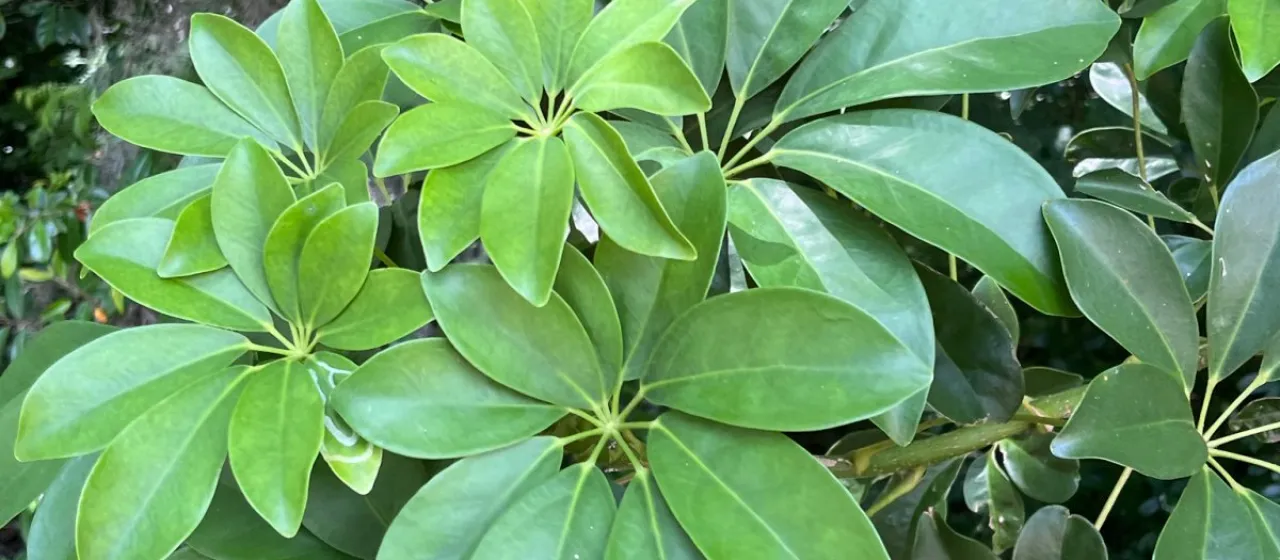
Botanically, the species is defined by its compound palmate leaves, each consisting of multiple leaflets attached to a long, slender petiole. The plant is known for its woody stem that becomes thick and sturdy with age. Mature specimens produce complex, umbrella-shaped inflorescences that carry small fruits, adding to its botanical interest.
Agricultural requirements for successful growth include bright, indirect light and a well-draining soil mix that prevents water accumulation. Consistent moisture is required, though the soil should be allowed to partially dry out between irrigation cycles. Fertilization with balanced nitrogen-rich compounds during the active growing season supports robust leaf development and structural integrity.
The primary use of Heptapleurum arboricola is decorative, being a staple in greenhouse production and interior landscape design. Common issues include pest infestations such as aphids, spider mites, and scale insects, which often proliferate in dry indoor conditions. Diseases like root rot are almost exclusively associated with improper irrigation practices or poor soil drainage.