
Description
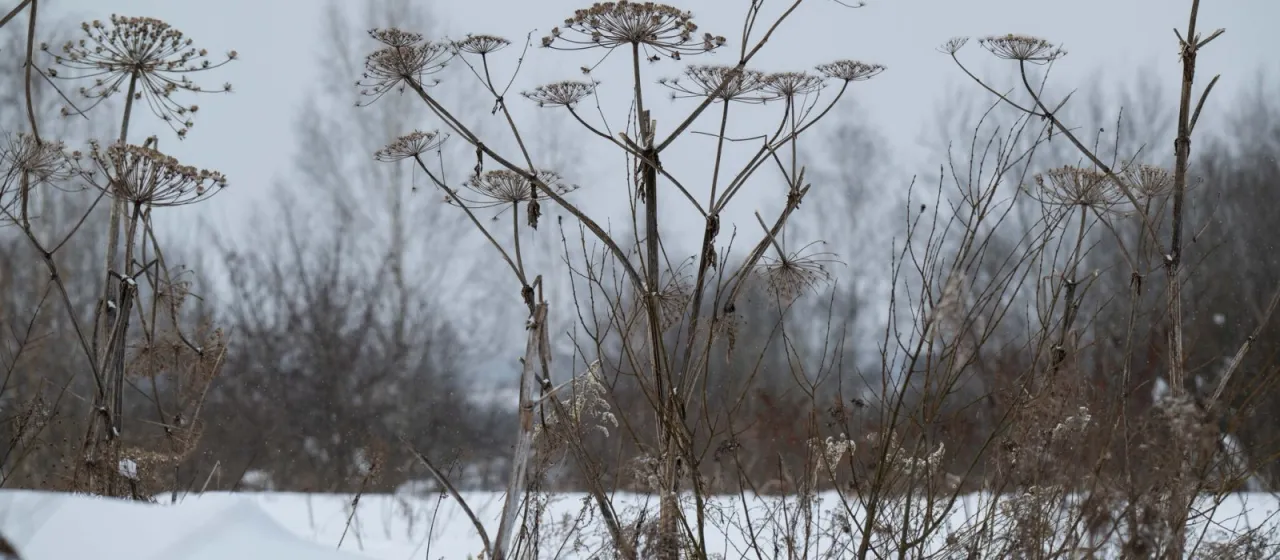
Sosnowsky's hogweed (Heracleum sosnowskyi) is a large biennial or perennial herbaceous plant belonging to the Apiaceae family. It was introduced into agriculture in the mid-20th century as a high-yield fodder crop, intended to provide mass production of silage for cattle due to its rapid growth rate and high biomass accumulation.
The plant originates from the Caucasus region. During the Soviet era, it was promoted for cultivation across various climatic zones, but its aggressive invasive nature quickly led to the contamination of neighboring ecosystems. It has since become a major ecological and agricultural nuisance in many parts of Eurasia.
Botanically, it is characterized by a thick, hollow, purple-spotted stem that can reach heights of over three meters. The leaves are compound and very large, and the inflorescence consists of massive umbels containing thousands of seeds. The sap of the plant contains furanocoumarins, which cause severe phytophotodermatitis, making handling the plant dangerous.
In terms of growth requirements, it is highly adaptable, flourishing in nitrogen-rich, moist soils. It thrives in temperate climates and is highly tolerant of frost, allowing it to colonize disturbed lands, roadsides, and abandoned agricultural fields. Its ability to regrow from its root crown makes simple mowing ineffective without proper follow-up treatments.
Management of this species is now a critical task for agronomists, focusing on eradication rather than cultivation. Effective control methods include:
- Deep excavation of the root crown.
- Regular mowing during the budding stage to prevent seed formation.
- Application of systemic herbicides on new growth.
- Seeding aggressive perennial grasses to outcompete young hogweed seedlings.