Scarlet hibiscus
Hibiscus coccineus x Hibiscus moscheutos L.
Description
Scarlet hibiscus is a hardy perennial belonging to the Malvaceae family. It is a highly valued hybrid resulting from the crossbreeding of Hibiscus coccineus and Hibiscus moscheutos. This plant is widely recognized in agriculture and horticulture for its impressive size, architectural foliage, and vibrant, large flowers that provide excellent ornamental value in various climatic zones.
The ancestral origins of this hybrid are linked to the wetland habitats of North America, which dictates its preference for consistently moist soil conditions. Unlike tropical hibiscus varieties, this plant is adapted to cold winters by entering a dormant state, where its herbaceous stems die back, while the rootstock remains viable underground until the following spring.
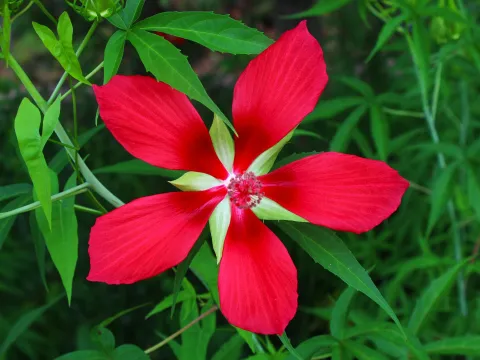
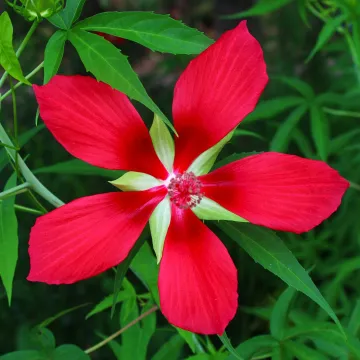
Botanically, the plant is characterized by its tall, sturdy stalks that can reach heights of up to two meters. The leaves are distinctively palmate, resembling those of maple or hemp, which creates a lush texture. The flowers are the focal point, typically displaying a brilliant crimson color and a signature staminal column, blooming in late summer to autumn.
Agricultural success depends on providing full sun exposure and a rich, moisture-retentive soil profile. The plant thrives in locations where it can access abundant water, making it suitable for rain gardens or near water features. Proper fertilization with a balanced mix during the active growing phase is essential to support the rapid development of stems and the heavy bloom cycle.
- Sunlight: Needs at least 6–8 hours of direct sun daily.
- Watering: High demand; never allow the root zone to dry out completely.
- Soil pH: Prefers slightly acidic to neutral conditions.
- Propagation: Often performed through division in spring or stem cuttings.
Common pests include aphids, whiteflies, and spider mites, which can proliferate in warm, dry weather or crowded plantings. Disease management focuses primarily on preventing fungal infections like leaf spot or root rot, which are often caused by poor drainage or lack of airflow. Monitoring and preventative horticultural practices are vital to maintaining plant health and ensuring seasonal longevity.
Photo gallery