
Hibiscus panduriformis
Hibiscus panduriformis Burm. f.
Description
Hibiscus panduriformis is a botanical species belonging to the Malvaceae family, recognized for its role as a fiber-producing plant in various tropical regions. Unlike some of its ornamental cousins, this plant is primarily valued in its native range for its ruggedness and the quality of its stem fibers, which have been used traditionally by indigenous communities.
Originating from Africa, India, and parts of Australia, this species thrives in tropical and subtropical environments. It is frequently found in floodplains, disturbed riverbanks, and open scrublands. The plant demonstrates high ecological plasticity, allowing it to colonize diverse landscapes where temperatures remain consistently high throughout the year.
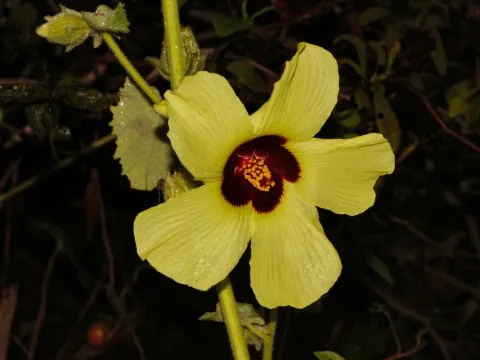
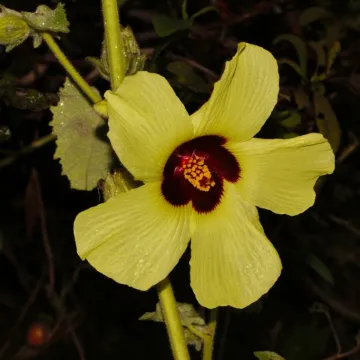
The botanical structure of Hibiscus panduriformis is characterized by its pubescent (hairy) stems and distinctively lobed leaves that often resemble a fiddle shape. Its flowers are typically yellow with a deep purple or maroon center, following the standard morphology of the genus. The plant is notably rapid in its growth habit, capable of reaching significant heights within a single growing season under optimal conditions.
Cultivation requirements for this species include specific environmental parameters:
- Soil: Prefers well-drained, sandy loam soils rich in organic matter.
- Temperature: Requires a warm climate; it is highly susceptible to frost and requires full sun exposure.
- Management: Crop management focuses on maintaining soil moisture during the germination phase and protecting young seedlings from competitive weed growth.
From an agricultural and economic perspective, the primary use of this plant is the extraction of bast fiber. This fiber is utilized in the production of ropes, twine, and rustic textiles. Furthermore, the plant is researched for potential medicinal applications and its ability to withstand low-nutrient soils. Common threats to crop health include aphid infestations and fungal pathogens, which can be mitigated through proper spacing and moisture control in the field.
Photo gallery