
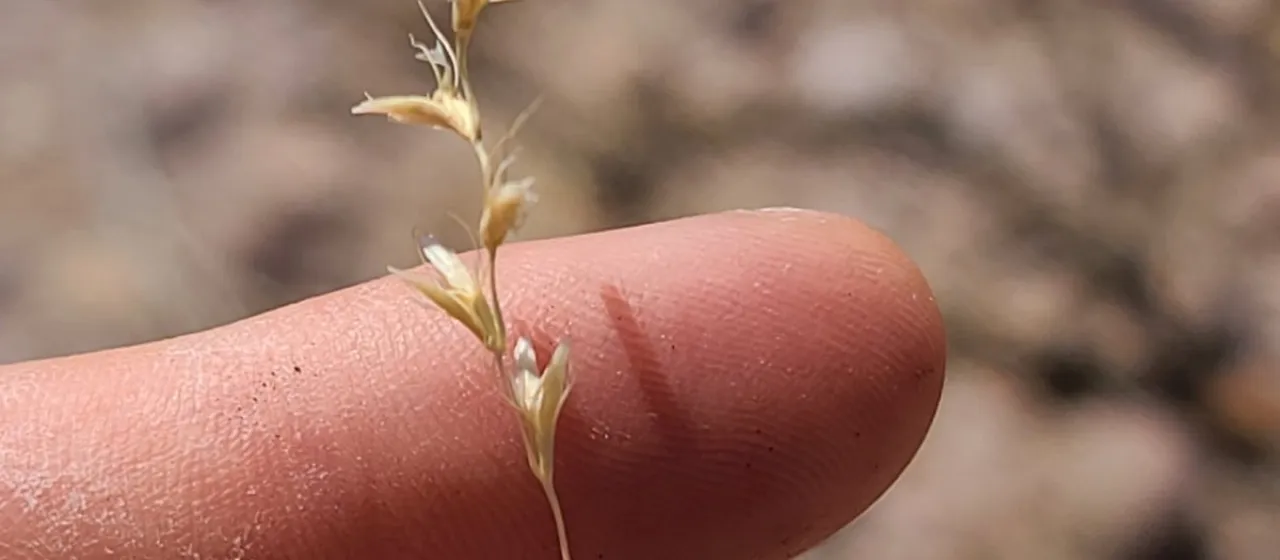
Description
Curly mesquite (Hilaria belangeri) is a perennial grass species belonging to the Poaceae family. This species is highly regarded in agronomy for its ability to provide sustainable forage in harsh, arid climates where other high-yield grasses fail to thrive.
Originating from the semi-arid regions of North America, its primary range includes the southwestern United States and Mexico. The plant is perfectly adapted to the cycle of intense heat and unpredictable rainfall characteristic of these territories, making it a staple of native grasslands.
Botanically, it is recognized by its dense, mat-forming growth habit. The plant produces stolons that allow it to spread across the soil surface, effectively anchoring itself. The leaves are typically curled, which is a structural adaptation to minimize water loss through transpiration, and the inflorescence consists of distinct spikelets.
In terms of agricultural requirements, Hilaria belangeri prefers well-drained soils, including rocky or calcareous types. It is highly drought-tolerant but requires carefully managed grazing pressure. Overgrazing can significantly weaken the mat, leading to soil exposure and a reduction in biomass production for subsequent seasons.
The primary economic use is as a reliable forage source for cattle, sheep, and goats. While the plant is quite hardy, it is susceptible to certain fungal pathogens during periods of uncharacteristic high humidity. Insect pressure is usually low, though grasshoppers and other defoliators can pose a risk during outbreak years.
As a key component of pasture management, this grass is essential for erosion control in fragile arid landscapes. Its ability to regenerate from its dense root structure makes it a resilient choice for long-term pasture sustainability in regions with limited irrigation resources.