
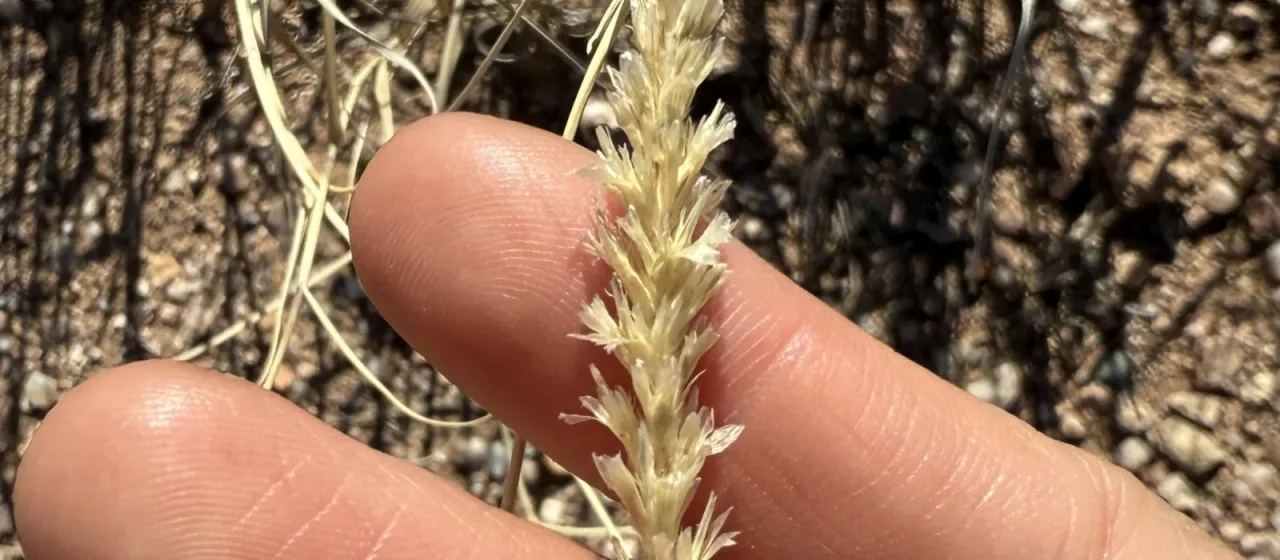
Description
Hilaria mutica, commonly known as tobosa grass, is a perennial grass species belonging to the Poaceae family. It is recognized as a resilient and ecologically significant plant, primarily adapted to the harsh environmental conditions found in arid and semi-arid landscapes.
The native distribution of this species is centered in the Southwestern United States and Northern Mexico. It is most frequently found in clay-rich soils, often referred to as "tobosa flats," where it thrives despite irregular rainfall patterns and extreme heat that would inhibit the growth of less specialized grasses.
Botanically, the plant is characterized by its stiff, leafy culms and a robust, rhizomatous root system. During the growing season, it produces greyish-green foliage that remains palatable to livestock. It has a remarkable physiological ability to enter dormancy during prolonged droughts and rapidly respond with new growth when moisture becomes available.
Agronomic management of Hilaria mutica requires an understanding of its sensitivity to heavy grazing pressure. In agricultural practice, rotational grazing systems are recommended to maintain the vigor of the plant community. It does not require high levels of fertilization but benefits from managed fire regimes to remove accumulated dead biomass and stimulate productivity.
In terms of хозяйственное использование, tobosa grass is a primary forage source for cattle and various wildlife species. Beyond animal production, it is highly valued for soil stabilization and landscape restoration in arid areas, as its deep roots prevent erosion and improve soil structure in degraded environments.
- Exceptional drought tolerance.
- Thrives in clay-heavy soil substrates.
- High value for sustainable rangeland forage.
- Key role in erosion control programs.