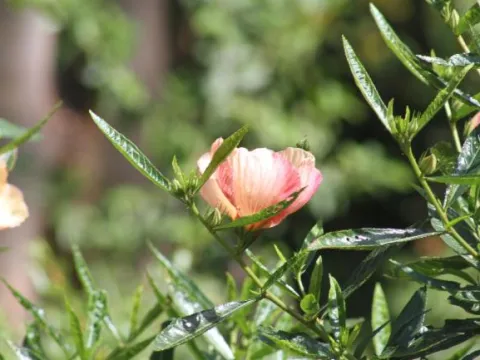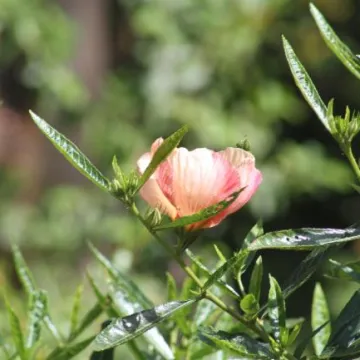
Hollyhock tree
Hibiscus splendens Fraser ex Graham
Description
The Hollyhock tree (Hibiscus splendens) is a striking perennial shrub or small tree belonging to the Malvaceae family. Known for its impressive stature and large, vibrant pink flowers, this species serves as a prominent ornamental element in warmer temperate and tropical climates.
Native to the eastern regions of Australia, specifically New South Wales and Queensland, the plant is naturally found in rainforest margins and eucalypt forest understories. This evolutionary background dictates its preference for sheltered locations that provide protection from harsh, direct sunlight and strong winds.
Botanically, Hibiscus splendens is characterized by its distinctively large, lobed leaves with a fuzzy texture. The flowers are the primary feature, typically displaying large pink petals with a deep, contrasting dark magenta or purple center. The blooming period is a significant display of its aesthetic potential during the summer season.
Cultivation requires attention to soil composition; the ideal substrate is humus-rich, loose, and well-drained. As a tropical species, it is sensitive to cold temperatures and requires consistent moisture without waterlogging. Proper site selection, such as semi-shaded garden spots, is essential for its healthy development.
In terms of usage, it is strictly an ornamental crop used for landscape design and private garden collections. Maintenance practices include regular pruning to keep the shape, and careful monitoring for common pests like aphids or spider mites. Fungal diseases can occur if humidity levels are poorly managed in compact soil conditions.
- Light: Partial shade or filtered sunlight.
- Moisture: Keep the soil consistently moist but not waterlogged.
- Soil pH: Slightly acidic to neutral.
- Fertilization: Balanced fertilizers during the growing season.
- Protection: Avoid frost and extreme wind exposure.
Photo gallery