Siebold's Hosta
Hosta sieboldiana (Hook.) Engl.
Description
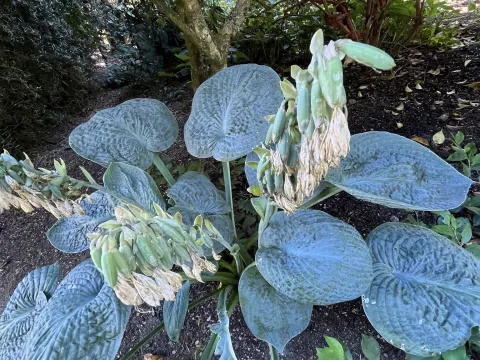
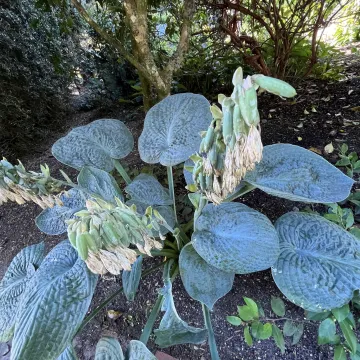
Siebold's Hosta (Hosta sieboldiana) is a popular herbaceous perennial belonging to the Asparagaceae family, highly prized by gardeners for its massive, corrugated leaves with a distinct glaucous blue-green hue. It serves as a structural centerpiece in garden beds, providing excellent foliage interest throughout the growing season.
Native to the forests of Japan, this species has evolved to thrive in cool, moist, and shaded environments. Its geographical adaptability has allowed it to become a staple in temperate climate gardens across North America and Europe, where it is valued for both its aesthetic appeal and its robust, long-lived nature.
The botanical structure of the plant consists of a crown of thick, heart-shaped leaves that can reach significant sizes in mature specimens. During the summer months, the plant produces tall, sturdy scapes carrying clusters of pale lavender or white flowers. The plant enters dormancy in late autumn, returning each spring from its hardy rootstock.
Cultivation requirements focus on providing the right balance of shade and soil quality. They prefer well-draining, moisture-retentive, organic-rich soil with a slightly acidic pH. While they are drought-tolerant once established, supplemental watering during dry spells is recommended to maintain leaf integrity and prevent scorching.
Siebold's Hosta is primarily used in landscaping for shade borders, woodland garden designs, and as a groundcover. While generally resistant to many pests, the primary challenge remains protecting the foliage from gastropods. Monitoring for signs of viral diseases and ensuring proper spacing to encourage air circulation are key components of integrated pest management for this culture.
Photo gallery