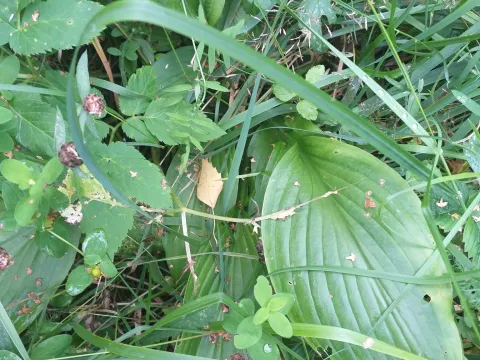

Wavy-leaved hosta
Hosta undulata (Otto & A. Dietr.) L. H. Bailey
Description
Hosta undulata, commonly known as the wavy-leaved hosta, is a perennial herbaceous plant belonging to the Asparagaceae family. This species is highly regarded in horticulture for its distinctively wavy leaves and variegated patterns, making it a staple in shade gardening across temperate regions.
The plant originates from East Asia, primarily Japan and China. It has become a widely cultivated ornamental crop globally due to its remarkable adaptability, hardiness in various climates, and ability to thrive in low-light environments where many other flowering plants struggle to grow.
Botanically, the plant is characterized by a basal rosette of leaves featuring undulating margins and distinct, prominent venation. The leaf surface often displays a striking contrast between dark green edges and a creamy-white center. In mid-summer, the plant produces tall, slender scapes adorned with delicate, pale purple or lavender funnel-shaped flowers.
Cultivation requirements involve selecting a site with partial to full shade, as intense sunlight can cause the foliage to scorch and lose its characteristic variegation. The species thrives in fertile, well-draining, humus-rich soil that retains moisture consistently. Regular mulching and irrigation are essential, particularly during the active growing season to prevent leaf wilt.
Economically and aesthetically, Hosta undulata is utilized extensively in landscaping for borders, woodland gardens, and as a groundcover. While generally robust, the plant can be susceptible to pests such as slugs and snails, which target tender foliage. Fungal pathogens like crown rot may occur in poorly drained soils, making proper site preparation and spacing critical for long-term health.
- Plant height: 30–50 cm
- Light preference: Shade to partial shade
- Soil type: Fertile, moist, well-drained
- Bloom time: July to August
- Hardiness: Highly cold-tolerant
Photo gallery