
Description
Hyptis capitata, commonly known as the knobby clubmoss, is a herbaceous plant belonging to the Lamiaceae family. While often viewed as a pervasive weed in tropical environments, it has garnered significant interest for its medicinal properties and phytochemical potential, making it a subject of agricultural study in various regions.
The plant originates from the tropical Americas, although it has naturalized extensively throughout Southeast Asia, the Pacific Islands, and the Caribbean. It thrives in open, disturbed environments such as roadsides, cleared agricultural land, and riverbanks, where it competes aggressively for space and resources due to its robust growth habit.
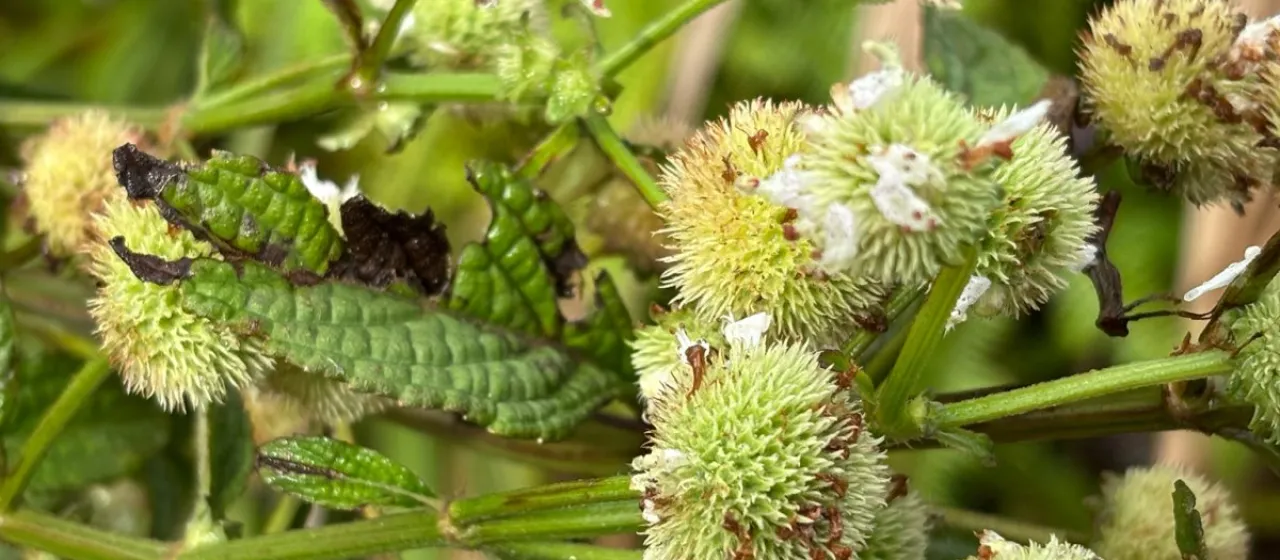
Botanically, Hyptis capitata is characterized by its square, four-angled stems and opposite, lanceolate leaves with serrated margins. The most distinct feature is its inflorescence: dense, spherical heads perched on long, slender stalks. A mature plant can grow up to two meters in height, exhibiting a woody base that supports its rapid vertical development.
Agronomically, this crop requires a warm, humid tropical climate to reach its full potential. It grows best in well-drained, fertile soils but displays significant resilience in poorer soil conditions. Successful cultivation depends on initial weed management, adequate spacing to allow for airflow, and sufficient sunlight, as the plant is poorly suited to shaded environments.
The primary economic use for Hyptis capitata lies in the pharmaceutical and cosmetic industries. Traditional medicine utilizes its leaves and extracts for their anti-inflammatory, analgesic, and wound-healing properties. Current research focuses on extracting specialized essential oils and flavonoids, which show promise in developing natural antimicrobial agents and topical skin treatments.
- Anti-inflammatory properties
- Wound healing applications
- Natural antimicrobial potential
- Traditional medicinal uses
Pest management for this crop mainly involves controlling leaf-eating larvae and aphids, which can stunt development if left unchecked. Pathological issues are generally associated with fungal infections like root rot or powdery mildew, typically exacerbated by waterlogged conditions. Maintaining proper field drainage and avoiding overcrowding are essential practices for ensuring healthy plant development.