
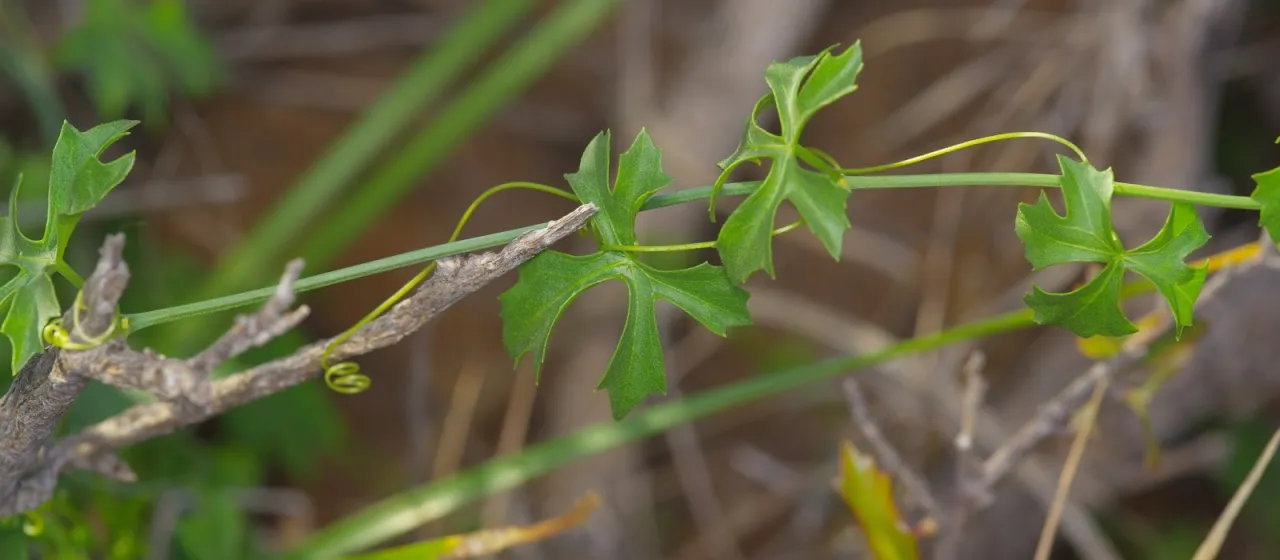
Description
Lindheimer's globeberry (Ibervillea lindheimeri) is a perennial vine species within the Cucurbitaceae family. It is best known for its large, woody, above-ground or semi-submerged caudex, which functions as a specialized reservoir for moisture and nutrients, allowing the plant to survive in arid environments.
The native distribution of this species is centered in the southwestern United States, particularly Texas, and extends into northern Mexico. It typically grows in rocky canyons, limestone outcrops, and scrublands, reflecting its strong adaptation to harsh, water-limited ecosystems and intense solar exposure.
Botanically, the plant is characterized by annual vining stems that emerge from the caudex during favorable growing conditions. The foliage is characteristically lobed, and the plant produces small, inconspicuous flowers. The lifecycle includes a strictly defined dormant period, triggered by environmental cues, during which the plant sheds its aerial parts to conserve energy.
Cultivation requirements for Ibervillea lindheimeri focus primarily on extreme drainage and light. It thrives in porous, inorganic soil mixes that mimic its native rocky habitat. Growers must be cautious with irrigation, as excess water in the substrate—especially during dormant months—can lead to rapid decay of the caudex tissues.
- Optimal growth in full sun exposure.
- Strict management of the dormant season to prevent root rot.
- Propagation primarily via seed germination.
- Ideal candidate for arid-landscape or xeriscape garden designs.
In terms of agricultural and horticultural utility, the species is highly regarded among botanical enthusiasts and specialized nurseries. While not a conventional food or fiber crop, its role in ornamental horticulture as a unique xeriscaping component and its scientific value in studying plant drought-adaptation strategies make it a significant niche plant.